Genre: Christian Historical Fiction (Victorian Gothic Romance)
The shadows hold secrets darker than they ever imagined. . . .
In 1888 Victorian England, Ami Dalton navigates a clandestine dual life. By day, she strives to establish herself as a respected Egyptologist, overcoming the gender biases that permeate academia. But with a heart for saving black-market artifacts from falling into the wrong hands, she is most often disguised as her alter ego, the Shadow Broker.
After eight years in India, Oxford’s most eligible bachelor, Edmund Price, has come out of the shadows to run for Parliament and is in search of an Egyptologist to value a newly acquired collection. Expecting a renowned Oxford professor, Edmund instead finds himself entangled with Ami, the professor’s determined daughter. As they delve into the treasures, their connection deepens, but trouble emerges when a golden griffin–rumored to bear the curse of Amentuk–surfaces, and they’re left to wonder if the curse really is at play, or if something more nefarious is hiding among the shadows. . . .
“Don’t miss all the romance, adventure, and danger in [this] new page-turner.”–JULIE KLASSEN, bestselling author of Shadows of Swanford Abbey
About the Author
I hear voices. Loud. Incessant. And very real. Which basically gives me two options: choke back massive amounts of Prozac or write fiction. I’ve been writing since I discovered blank wall space and Crayolas. I seek to glorify God in all that I write–except for that graffiti phase I went through as teenager.
My Impressions
“Perhaps-just maybe- all her striving to prove her intelligence and credibility didn’t matter a whit to God…perhaps her worth was in who she was, who God made her to be, instead of being measured by what she achieved. Dare she believe that?”
The name Michelle Griep is synonymous in my book with “must buy.” Her latest, Of Gold and Shadows, is a great representation of her finest work. Griep combines a female Egyptologist who wants for recognition in the field, a rich young man with a strong moral compass but a misguided way of helping the needy, and treasures, one cursed, that literally seem up for grabs.
Ami Dalton is the young Egyptologist who has two goals: gain recognition in her field and make her archaeologist father proud of her. Cataloguing and valuing handsome, young Edmund Price’s Egyptian relics is a great job that should lead her a step closer to her goals.
Edmund has recently returned from India and has a heart for the people there, wishing to help them by acquiring a Parliament seat so he can be influential in laws governing taxes on India. We quickly get the idea that Edmund is a fish swimming upstream, as we see others of influence in England only wanting to benefit from India and its people. But, as noble and faith-based as his caring ideas are, will the ends justify the means?
I loved the twist revealed at the end! I could not figure out why a certain character behaved as he did! I also loved how Edmund and Ami took turns building each other up, using their faith. But will they allow God to ultimately guide their future, or will they each continue down their pre-determined paths?
Michelle Griep always delivers a compelling story, a swoony romance, and truth nuggets carefully placed for maximum effect. Her ability to create the atmosphere by use of language ( expressions like “bosh,” “ codswallop,”and “stars and lightning”) and lyrical prose is so expressive. Sometimes I would have to stop reading, reread a sentence, and just savor the beauty of it!
I highly recommend this book for any historical romance fans!
I received a copy of the book from the author and publisher through NetGalley, but I also purchased my own copy for the keeper shelf. No positive review was required, and all opinions are my own.
Notable Quotables:
“God’s will shall not be thwarted. He always makes as way.”
“Bottling up bad memories is a recipe for broken glass.”
“…his vulnerabilities were not s sign of weakness but were in fact opportunities for God’s love to be made perfect.”
“A good journalist could make a pile of manure into a bag of diamonds. A bad one, turn a saint into a sinner.”
“That’s the thing about fathers. They tend to have a way to make us feel like needy, negligible, little children-save for our Heavenly Father, that is…We are never insignificant in His eyes.”– Ami
She’s desperate to keep her job. He’s desperate for solitude. What is God’s plan in this complicated situation?
Ruby Shepherdson has worked hard to secure her job as a reporter for The Horizon Herald. After a costly mistake, Ruby’s unforgiving boss gives her an ultimatum to either interview the handsome and reclusive Jake Lynton—or lose her job. But each time Ruby has attempted to obtain an interview, Mr. Lynton has refused. Why would anyone who has saved the lives of four people deny recognition? And why does she find herself drawn to the man?
Jake Lynton just wants to be left alone. Haunted by the past, he runs from both guilt and God by leaving home and somehow finding himself in Horizon, Idaho. His hopes of living as a recluse are foiled when a pesky, but beautiful reporter insists he allow her to interview him about a good deed gone awry. Despite Jake’s efforts, Ruby Shepherdson persists, soon endearing herself to him while somehow remaining endlessly annoying.
Jake’s story isn’t the only one Ruby seeks to publish. When rumors of ill dealings come to her attention, she sets forth to uncover the truth—truth someone does not want revealed. As danger emerges and an unanticipated enemy determines to keep Ruby silent, will Jake fit the pieces together in time to rescue her? Or will he lose the woman who has found a place in his heart?
Penny Zeller is known for her heartfelt stories of faith-filled happily ever afters and her passion to impact lives for Christ through fiction. Her books feature tender romance, steady doses of humor, and memorable characters that stay with you long after the last page.
While she has had a love for writing since childhood, Penny began her adult writing career penning articles for national and regional publications on a wide variety of topics. Today Penny is a multi-published author of over two dozen books and is also a fitness instructor, loves the outdoors, and is a flower gardening addict. In her spare time, she enjoys camping, hiking, kayaking, biking, birdwatching, reading, running, and playing volleyball.
Penny resides with her husband and two daughters in small-town America and loves to connect with her readers.
More from Penny
Thank you so much for joining me for the Beyond the Horizon blog tour. I am super excited to share Ruby Shepherdson’s story with you and can’t wait for you to meet newcomer Jake Lynton. Below is an excerpt from the first chapter. Happy reading!
Horizon, Idaho, 1895
For a moment, she was the world-famous reporter, Ruby Shepherdson, author of the latest award-winning article.
Ruby closed her eyes and imagined seeing her name below the numerous articles and stories she submitted to Mr. O’Kane, the editor of The Horizon Herald. The editor from the prestigious Boise City Chronicle, who was just happening to visit his mother in Horizon, would peruse the pages of The Horizon Heraldand become engrossed in one of Ruby’s engaging articles. He would then invite her to submit a monthly story to his well-read publication.
But alas, such a fanciful dream would have to wait.
Ruby resumed scrubbing one of Papa’s shirts on the washboard. There was no fictional editor from The Boise City Chronicle visiting his mother in Horizon. And until Ruby’s shipment of her Smith Premier typewriter arrived from the R. Altman & Company in St. Louis, Missouri, she would continue to dip her pen in ink and handwrite each and every composition she submitted to the cantankerous man who’d become her boss just one year ago last week.
Not that she minded tending to everyday chores, including laundry on Mondays, for she didn’t. As a matter of fact, Ruby’s highest aspirations were to marry someday and be a wife and mother. But until the Lord saw fit to allow a suitable gent into her life, she would continue on the path of writing.
Ruby hung the shirt on the line and proceeded with washing the next item when she noticed a buggy rounding the curve to their farm. She stood tall and placed her hands on her lower back to stretch the tightness from hunching over the washboard. A closer perusal indicated Wilhelmina, one of Mama’s best friends, was paying them a visit.
Wilhelmina, a permanent smile on her round face, folded Ruby into a hug. “It’s so nice to see you. Your ma and I are planning some new recipe ideas, but first, I was asked to deliver a message.”
It didn’t surprise Ruby that Mama and Wilhelmina would be experimenting with recipes. After the Bible, Mama’s favorite book was Recipes from Augusta’s Kitchen, a book she’d purchased when she and Papa first married. “A message?”
“Yes. Tabitha said to tell you that your special purchase has arrived.”
The air caught in Ruby’s lungs. “My special purchase? It has arrived?”
“That’s what she said.”
Not caring how unladylike it might be, Ruby let out an enthusiastic squeal, threw up her hands in excitement, and danced a little jig.
“Might be that you are thrilled to hear this news,” teased Wilhelmina.
“Oh, yes. Not only thrilled but exhilarated. I’ve waited forever for this momentous occasion.”
My Impressions
“There’s nowhere better to be than resting in the Lord’s arms. Reckon that’s the safest place for us to be.”
It’s time for another visit to Horizon, Idaho, circa 1895, guided by Penny Zeller’s historical prairie western voice. In bk 3, Beyond the Horizon of the Horizon series, we meet a struggling female journalist and a curmudgeonly, isolationist farmer.
Ruby Shepherdson is fighting hard to make a career for herself as a journalist, starting by working for the local paper, where her competition is the editor’s rich, spoiled niece. When a chance for the story of a lifetime comes, she begins badgering newcomer Jake Lynton to give her an interview.
Jake is running from his past and God. He moved to Horizon for anonymity, and he has no desire to let a beautiful but pesky redhead bring his past where everyone can see and judge.
I always enjoy Penny Zeller’s humorous, easy story-telling style. The family camaraderie and banter is fun to see. As expected by now, I found several truth nuggets. What surprised me was how much a few of them would suddenly apply to me as real life took a turn as I read the story. That’s when I know I have read a novel I love and want to share- when I find bits that strengthen me in my daily life, even as I’m entertained. Thank you, Ms. Zeller!
I received a copy of the book from the author and publisher through Celebrate Lit. I also bought my own copy. No positive review was required, and all opinions are my own.
Notable Quotables:
“While perspectives have their place, truth is always the best option.”
“Because people were more important than articles. Even articles that ought to be written.”
“I realized that while I can blame God for what happened, I’ll never know the peace I could know while being distanced from Him.”
“…one day with the Lord is as a thousand years and a thousand years as one day. He does not see time as we do. We see the tintype version, but He sees an enormous painting.”
My Rating
⭐️⭐️⭐️⭐️⭐️
Magnificent! Sweet romantic , humorous, story of Old West with Truth woven in still applies today!
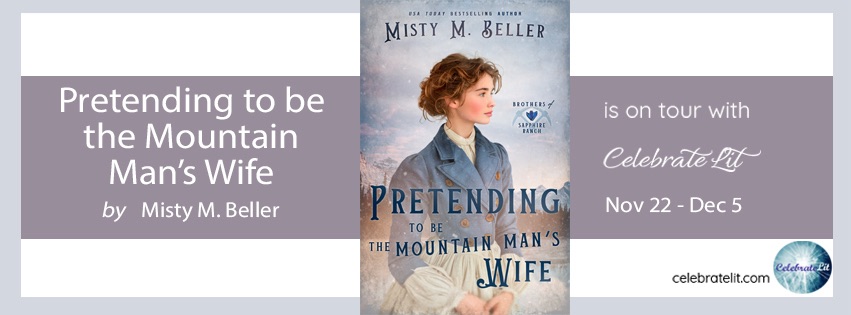
Book: Pretending to be the Mountain Man’s Wife (Brothers of Sapphire Ranch Book 6)
Author: Misty M. Beller
Genre:Christian Historical Romance
Release date: November 19, 2024
In the wild mountains of the Montana Territory, the Coulter ranch is a place of family, second chances…and a hidden fortune.
Determined to find his missing brother and catch the elusive mastermind behind the theft of his family’s precious sapphires, Gil Coulter embarks on a solo mission to the remote town where the criminal is rumored to reside. As Gil scours the surrounding wilderness for the thief’s hidden lair, he crosses paths with a captivating young woman who harbors secrets of her own.
Jess McPharland has spent her life hidden in the mountains, doing her best to stay separate from her family’s business. Yet the secret she’s just discovered will change her life forever. She offers a silent prayer, pleading for a man to help her conceal the truth she’s only just discovered. As if in answer, Gil Coulter rides through the trees, seeking the very criminal Jess calls Father. Now she must find a way to ask this stranger for the ultimate favor—to pose as her husband and shield her from the consequences of a change she won’t be able to hide much longer.
As Gil and Jess navigate the treacherous landscape and the greater danger from her father and his cronies, they find themselves caught in a web of danger, deception, and unexpected attraction. With each passing moment, the stakes grow higher, and the line between pretense and truth blurs. Will the love growing between them be enough to protect Jess’s secret and lead them to the justice Gil seeks, or will the truth shatter everything they’ve risked their lives to build?
From a USA Today bestselling author comes a mountain saga filled with high-stakes adventure, a pretend marriage, a secret baby, and love that heals wounded hearts.
Misty M. Belleris a USA Today bestselling author with over 1 million books sold. She writes romantic mountain stories, set on the 1800s frontier and woven with the truth of God’s love.
Raised on a farm and surrounded by family, Misty developed her love for horses, history, and adventure. These days, her husband and children provide fresh adventure every day, keeping her both grounded and crazy.
Misty’s passion is to create inspiring Christian fiction infused with the grandeur of the mountains, writing historical romance that displays God’s abundant love through the twists and turns in the lives of her characters.
Sharing her stories with readers is a dream come true for Misty. She writes from her country home in South Carolina and escapes to the mountains any chance she gets.
More from Misty
In Pretending to be the Mountain Man’s Wife, the heroine and her father live in a cave which is part of an intricate catacomb hidden inside Montana mountain.
I LOVED researching cave systems, especially those in Montana, and I was amazed at how many extensive tunnels and caverns have been discovered!
One of the most well-known is Lewis and Clark Caverns State Park, located between Butte and Bozeman. This spectacular limestone cave system features a series of caverns adorned with incredible rock formations. These days, visitors can take guided tours to marvel at the intricate stalactites, stalagmites, columns, and helictites that have formed over thousands of years. The cave is also home to several species of bats.
Another notable cave system is the Bighorn Caverns, situated in the Pryor Mountains south of Billings. This complex network of caves extends for over 14 miles, making it one of the most significant cave systems in the state. Experienced cavers can explore winding passages, underground streams, and vast chambers with unique mineral formations.
The Bighorn Caverns are very similar to how I imagine the cave system was that Jess lived in. As amazing as the tunnels are to explore, I’m not sure I’d want to live in such darkness. What about you?
I pray you enjoy Gil and Jess’s story in Pretending to be the Mountain Man’s Wife! J
Blessings!
Misty
My Impressions
“She would always be Mick McPharland’s daughter, and he’d never let her escape his control.”
Misty M. Beller has done it again! She has developed another fresh but related Coulter brother story to add another facet to the diamond that is Brothers of Sapphire Ranch series. Pretending to be the Mountain Man’s Wife is #6 in this series, and it tells the narrative of Gil Coulter and Jess McFarland in 1870s Montana Territory. ( Do yourself a huge favor and read this series in order to avoid spoilers!)
Gil happens upon Jess on a mountainside, where she promises to help him find his missing brother, Sampson. Her price is that he help her escape her father’s control. To explain Coulter’s presence to her conniving, mean-spirited father and henchman, Gil and Jess pretend to be married. As Jess focuses on escaping, Gil insists on exploring and searching for his brother, plus the Coulter family’s jewels that were stolen recently.
This is a story about love and loyalty that give unselfishly and even when it hurts. It’s about a daughter who understands how wicked her father is, yet because of her need for security and affection, craves her father’s approval, knowing it will never come. Beller shows us how an earthly father without love for his child makes it difficult for that child to understand God as a good father. “It seemed impossible to think of Someone Who loved her, Who planned good things for her—hope and a future—and also think of Him as a Father.” She also shows God’s acceptance, forgiveness, and love for people who turn from their wrong ways to follow Him.
All these truths are wrapped up in a beautiful, romantic, and achingly sad story. There is plenty of action and suspense to keep the reader turning those pages to find out what happens next.
I received a copy of the book from Celebrate Lit. I also bought my own copy. No positive review was required, and all opinions are my own.
Notable Quotables:
“God forgave you the very first time you asked. He doesn’t hold your past against you.”
“God was with them. He would make a way, even when there seemed no options.”
“Father was as different from Gil as the darkness of the cave from noontime sunshine.”
“I was a possession to him, someone he could use for his advantage.”
My Rating
⭐️⭐️⭐️⭐️⭐️
Magnificent! Another thrilling installment of the Coulter brothers’ stories, with the clear promise of more adventures to come!
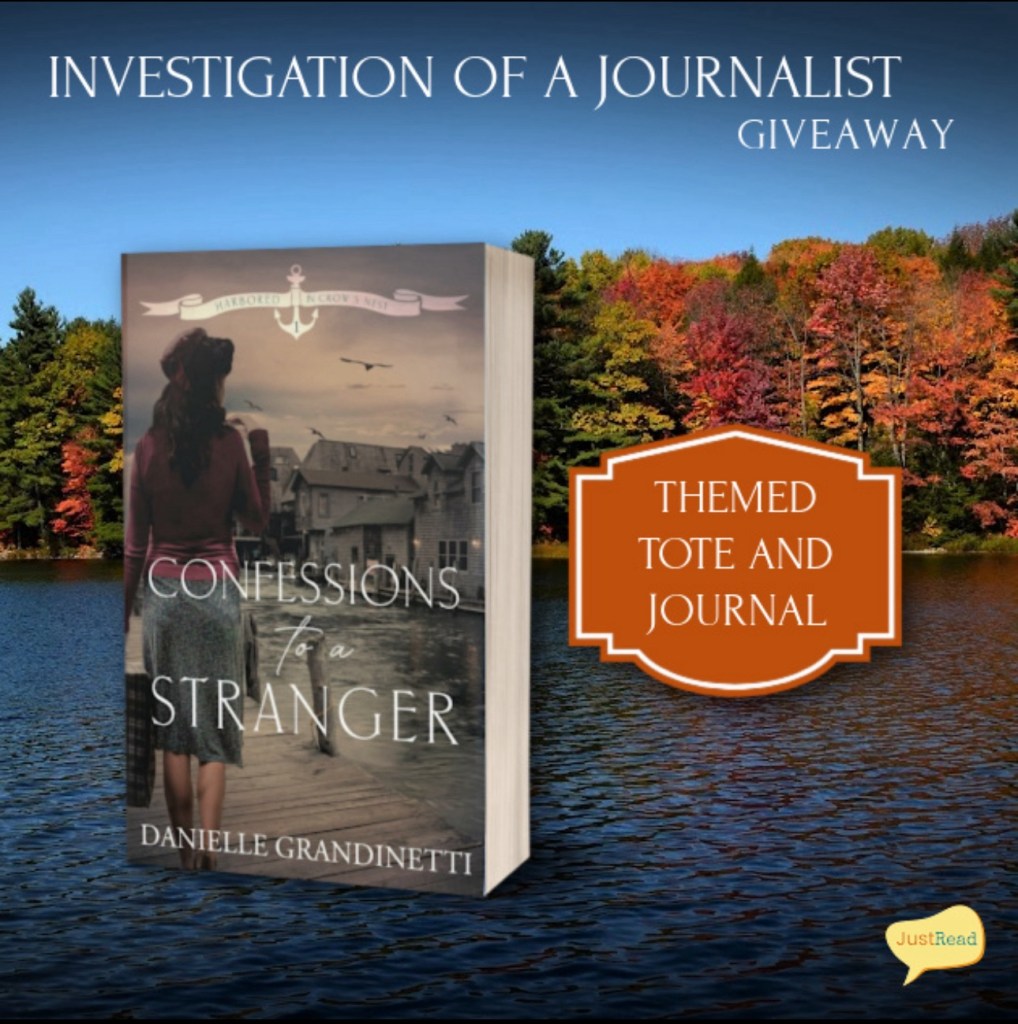
Welcome to the Blog + Review Tour for Investigation of a Journalist by Danielle Grandinetti, hosted by JustRead Publicity Tours!
About the Book
Title: Investigation of a Journalist Series: Harbored in Crow’s Nest #6 Author: Danielle Grandinetti Publisher: Hearth Spot Press Release Date: November 19, 2024 Genre: Christian Historical Romance/Suspense
A second chance to set the record straight, and rekindle a lost love.
Wisconsin, 1931—Buck Wilson refuses to accept failure as his reward for all he has sacrificed, but he’s kept secrets for too long to be believed. With his freedom on the line, there’s only one person he trusts to mine for the true story: the woman he left one month before their wedding.
All investigative journalist Caroline Wagoneer wants is to shine a light on the truth wherever darkness threatens to obscure it. Which is the only reason she agrees to help her ex-fiance when he begs for her to go undercover in Crow’s Nest. What she discovers paints Buck in a whole new light.
With lies and rumor hemming them in, Buck and Caroline realize their love may be doomed on the altar of altruism.
Unless love can truly conquer all.
Welcome to Crow’s Nest, where danger and romance meet at the water’s edge.
Danielle Grandinetti is an award-winning inspirational romance author fueled by tea and books. As a FHLCW Reader’s Choice and Selah Award Finalist, she mixes romance, suspense, and history to bring her stories to life. Originally from the Chicagoland area, she now lives along Lake Michigan’s Wisconsin shoreline with her husband and their two young sons.
Connect with Danielle at daniellegrandinetti.com to follow her on social media and sign up for email updates.
My Impressions
“The grotesque Halloween masks decorating the wall seemed to mock him. He’d been wearing a mask for so long, he didn’t know how to take it off.”
Finally! Buck and Caroline’s story is here in book 6 of Harbored in Crows Nest, Investigation of a Journalist. Ever since book one (so yes, it really helps to read these books in order ) Buck has been a stumbling block to the upright citizens of Crows Nest. David Martins, one of the first characters we learn to love, considers Buck a thorn in the flesh at best, an enemy of those who want to make an honest living.
As we finally meet Caroline (Carrie), the Chicago journalist who Buck dropped like a hotcake a month before their wedding, some blanks in Buck’s past begin to be filled in. (There will be some blanks in your understanding, too, if you skip this prologue!) What happened to the wonderful man Carrie thought Buck was, before he broke their engagement and disappeared to Crows Nest?
On procuring info of a counterfeiting ring and being asked for help by Buck himself, Carrie goes undercover in Crows Nest. What she and Buck uncover will either incriminate Buck and send him to prison or prove him innocent and uninvolved with the irregularities occurring in the Conglomerate.
This is a fast-paced, historical romantic suspense-mystery with faith nuggets and wisdom seamlessly woven in. There may be a few swoon-worthy moments as well. “You can count on me to fight for you. Forever.” [ Buck] *Le Sigh*
Will Carrie and Buck glean enough information to prove Buck innocent? Can they do so without sacrificing one or both of their lives? Get your copy of Investigation of a Journalist today!
I received a copy of the book from the author and publisher. I also bought both an ebook and a paperback for the keeper shelf. No positive review was required, and all opinions are my own.
Notable Quotables:
“…tonight she’d gain entrance into the world that had destroyed her marriage before it had the chance to begin.”
“Fighting for truth, for justice, for good to prevail always has a cost.” Her words were quiet. “How can we expect not to pay a price when we follow a God willing to send His Son to vanquish evil with His life?”
“You must trust me. You must trust that God will protect me. And if He does not, if I do not make it, then He will be there to catch you.”
“Hope was as fragile as a leaf. One day green and bright, the next it died, fell, and curled to a brittle paper to be crunched under a shoe.”
“Yeah, she had a heart condition, too. Broken, shattered, and still in love with the man who’d devastated it.”
My Rating
⭐️⭐️⭐️⭐️⭐️
Magnificent! Grandinetti remains one of my fave historical romantic suspense authors! An auto-buy!
Tour Giveaway
(3) winners will each win a paperback copy of Confessions to a Stranger, a Crow’s Nest tote bag, and a Crow’s Nest Journal!
Full tour schedule linked below. The giveaway begins at midnight November 19, 2024 and will last through 11:59 PM EST on November 26, 2024. Winner will be notified within 2 weeks of close of the giveaway and given 48 hours to respond or risk forfeiture of prize. US only. Void where prohibited by law or logistics.
In a world where wealth and status reign, can true love prevail?
Miss Delia Lyndon, a young woman born into the prestigious Spencer-Lyndon family, is initially enamored with Thaddeus, the son of a prominent local stable owner, when he begins vying for her hand in marriage. She is keenly aware of how a union between the two families would seal their status as one of the most beloved couples from Lexington. However, when Jake, a handsome and charming newcomer, arrives on the scene, he catches her attention, casting doubts and fears in Delia’s heart. Torn between two suitors, Delia must navigate societal expectations, family pressure, and her own desires. Will she choose the man who seemingly has it all – wealth, charm, and a shared background in Kentucky’s elite circles – or will she follow her heart to the humble yet captivating Jake?
Jake Williams is determined to prove his worth in the competitive world of horse racing. Despite his humble beginnings as a farmer, he refuses to be intimidated by his rival’s malicious attempts to sabotage his chances, both on the racetrack and in winning Delia’s affections. With his trusted steed, Horizon, by his side, Jake faces each challenge head-on, guided by his unwavering faith.
When mysterious events begin occurring leading up to the annual Phoenix Stakes horse race, Delia must look beyond appearances and uncover the truth that lies beneath.
Lisa M. Prysock is a USA TodayBestselling Author who writes both Christian Historical Romance and Contemporary Christian Romance books—”Romance with a Dash of Food, Fashion, Faith, & Fun.” She writes both traditionally and indie published novels.
Kentucky inspires her writing and is home. Happily married to her husband of more than 24 years, she homeschooled two of their five children, now grown. When she isn’t writing, she likes to cross stitch, crochet, sew, scrapbook, read, swim, dance, take walks, travel, explore historical homes, garden, cook for her family, learn to play the piano and violin, and read great books.
More from Lisa
Hello Celebrate Lit Friends and Readers! I’m back to share a looksie at Book 2 from Kentucky Debutantes of the Gilded Age. I’ve really enjoyed my deep dive into all things Kentucky Derby and the world of horseracing in To Choose the Longshot.
Most of us have heard of Churchill Downs and Lexington’s Keeneland. But before Keeneland was the Lexington Association Racetrack. The annual spring race generally opened each year on that course with a featured race known as the Phoenix Stakes. It dates as far back in history as 1831! You can take a peek at the fascinating horse names of all the winners from 1831 to 2012, here. Of course, I’ve fictionalized names of winners and many events around the races in my series, but it’s fun to peek at real-life history when crafting our stories.
Leading up to and through the Gilded Age, the time period and setting of this series, the Phoenix race was generally sponsored by the Phoenix Hotel in Lexington. And more than Kentucky horseracing history, in Book 2, readers will get to come along for a glimpse at another course located in Baltimore, Maryland when the story takes our main characters to Pimlico. They referred to this track as the Old Hilltop in the early days of American horseracing history.
And atop Pimlico sits the famed weathervane. Did you know that painting the Preakness Stakes weathervane is a grand Pimlico tradition dating to 1909? The vane style is unique, commissioned by the Maryland Jockey Club, bearing the shape of a thoroughbred and jockey ever since the original arrow-shaped one was struck down by lightning. The new vane was christened by the colors of the silks carried by that year’s winner, Effendi.
I had a great deal of fun writing To Choose the Longshot starting with the very first page. The novel opens with a runaway bride! It’s always a wonder what makes a bride runaway, and my imagination went to work at once creating the situation that causes this bride so much consternation.
Readers get to learn more about Veronica’s sister in Book 2, Miss Delaney Lyndon. Everyone calls the shy and demure middle sister, Delia. And all of Lexington expects one of the Lyndon sisters to marry into the Sullivan family, since these two families are “Kentucky horseracing royalty.” But who will Delia choose to marry? Will she marry her handsome, wealthy, and daring beau, Thaddeus Sullivan, or will a rugged newcomer and underdog in their midst from the Adirondacks, Jake Williams, turn her head?
I cannot fail to mention that the beloved character of Aunt Mae from Book 1 makes an appearance in Book 2. She certainly has her hands full attempting to help Delia reach a decision about who she should marry, knowing it will impact the future of Velvet Brooks Farm for generations to come. But if anyone can help steer Delia to a decision, it’s Aunt Mae. As our heroine grapples with perceptions and tries to balance expectations with what’s in her heart, find out what happens next with a deeper look at the world of horseracing, sure to give horse enthusiasts plenty to cheer about.
Happy reading!
Blessings!
Lisa
My Impressions
“Two different futures stared at her, and with both in reach, what did the Lord want her to do?”
This was my first time reading a book by Lisa Prysock. I enjoyed reading To Choose the Longshot. A double-entendre title, this historical fiction deals with Kentucky horse racing in the Gilded Age. It also plumbs the heart of one Lexington horse farm heiress who cannot decide which beau she should choose.
As the reader, there is probably little doubt which beau Delia should choose. But childhood friendship, neighbors, peer and social pressure, combine with human desires to muddle thinking.
I really appreciated Aunt Mae’s thoughtful, guiding questions for Delia as she considers the two men who are pursuing her. What a great idea to spend much time, just waiting on the Lord, being peaceful and quiet, seeking His direction foremost. How often are we willing to devote large chunks of time to that, though we long for answers we think we desperately need?
I received a copy of the book from Celebrate Lit. I also bought my own copy. No positive review was required, and all opinions are my own.
Notable Quotables:
“Sit up straight and be somebody.”
“Perceptions aren’t always a reflection of the truth.”
“One thing I do know—the truth has a way of coming out.”
“When they finally wed, all of her problems would vanish.”- [Delia’s belief]
My Rating
⭐️⭐️⭐️⭐️
Great! A story about searching for God’s Will in the choice of a mate—set against the backdrop of Kentucky horse racing in the Gilded Age.
A Patriot scout, a Loyalist widow, and a desperate fight to save what matters most.
The death of her titled husband means that not only is Tabitha Gage no longer a lady—but she’s also abandoned on an isolated Southern Georgia plantation on the eve of revolution. With the fine house and fields sold to a neighbor, she’s left with a log cabin on unsettled timber land. Rather than marry the neighbor’s son, Tabitha determines to make her own way—and never again be shackled to a man she doesn’t love.
Sergeant Edmond Lassiter is one assignment away from promotion when he comes to the aid of a red-haired beauty fending off cattle rustlers. Thrown together during an attack at a nearby fort, the Patriot scout and Loyalist widow are surprised by the values they share—including honesty, loyalty, and equality. When Edmond learns the same man who ruined his family is after what little Tabitha has left, he convinces her they should work together to make her land profitable—all while fighting off the British from East Florida and her greedy neighbor, who sabotages their every effort to succeed. Their work together will be a business arrangement…nothing more. But as a British invasion threatens, the truth soon becomes clear—continuing the connection between them will risk far more than their hearts.
North Georgia native Denise Weimer has authored around twenty traditionally published novels and novellas–historical and contemporary romance, romantic suspense, and time slip. As a freelance editor and Acquisitions & Editorial Liaison for Wild Heart Books, she’s helped other authors reach their publishing dreams. The mother of two wonderful young adult daughters, Denise always pauses for coffee, chocolate, and old houses.
More from Denise
There were only going to be four books in my Scouts of the Georgia Frontier Series. But have you ever had a character take over a story? That’s what happened for books four and five.
Temperance Scott, the shy but principled heroine of A Conflicted Betrothal who started her own Daughter of Liberty group during Savannah’s 1765 Stamp Act Protests, had a feisty twin sister named Tabitha. Tabitha kept marching all over the page in her bright silk gowns, making Temperance feel pale by comparison, jockeying to maintain her position as Daddy’s favorite, and plotting to steal Temperance’s beau. When that failed, she stole the end of the novel instead, saving her sister from authorities tracking down the spy who wrote the Townsman Letters that accused prominent Loyalists of supporting the Stamp Act. Then she wed her father’s choice for her, the much older Henry Gage, Lord Riley, and sailed away on his sloop to avoid punishment. As the book closed, Temperance got to marry her Royal Ranger-turned-Patriot, Ansel Adams, while Tabitha was left to an unknown fate in swampy South Georgia. I kept wondering whatever became of the Savannah belle down there with the snakes and gators.
When I learned that Fort Barrington on the Altamaha River changed hands several times during the American Revolution, becoming Fort Howe while under Patriot control, I had to write book five, A Calculated Betrothal. Fast forward ten years, and Tabitha is newly a widow. The intervening years have not been kind, as her husband marginalized her when it became clear she would not provide him with the heir he desired. Their finances have dwindled as he continually sent money to his wastrel brother-in-law in England. Upon his death, she discovers the fine rice plantation has been sold to their greedy neighbors, Loyalist father and son Hugh and Julian Jackson. Julian has an alternate plan in mind, but Tabitha has no intention of yoking herself to another man she doesn’t love—particularly a cruel slave owner and womanizer. She takes her maid-slash-best-friend Dulcie and flees to the cabin Dulcie’s husband occupies on the south side of the river. This land, at least, is still hers…even though it offers only undeveloped timberland and swampland, free range for the Spanish cattle Dulcie’s husband herds.
But there’s an enemy more dangerous than the snakes and gators, and maybe even than the Jacksons…the British-allied East Florida Rangers that raid into South Georgia—burning, stealing, and rustling cattle. A confrontation with their vengeful colonel puts Tabitha at the top of their list. With enemies all around, how will Tabitha establish her independence? Enter Fort Howe’s Sergeant Edmond Lassiter, a man determined to settle his own score with the Jacksons. He offers the help Tabitha needs, but with their hidden wounds and differing backgrounds, can they learn to trust each other enough to defeat their common enemies?
My Impressions
“What made no sense was that proximity to a certain dainty widow affrighted him more than the tangled bog and all its wild creatures—possibly including the human variety.”
Scouts of the Georgia Frontier by Denise Weimer is a series I’ve been reading as it releases. Now we are up to book 5, A Calculated Betrothal. We get to discover what happened to the selfish twin, Tabitha Scott, who uncharacteristically sacrificed herself to save her Patriot-leaning sister. Not only does Tabitha give up the man she was chasing to her sister, and take the blame for Temperance’s “crime” in court, but she also marries her father’s much-older choice for her. A Calculated Betrothal starts with the death of Tabitha’s rich, demeaning, heirless husband. Finally, Tabitha is free! If only!
Tabitha soon finds herself stripped of all wealth by greedy neighbors. The father will wipe out her debt if she marries his son, a known rake. Tabitha is relegated to a small cabin on the back acreage, which also houses her free married servants.
It is a joy to see Tabitha journey from rich, conniving, and spoiled, to becoming a hard worker who values her servants as friends instead of chattel. She does, however, have a harder journey learning to trust God and learning to trust Sgt. Edmond Lassiter, whom she meets in a most unusual way. The two have many dealings together, as Lassiter is billeted at the nearby Fort. An area patriots previously considered unimportant sees much military action, which teaches the reader a lot of history and gives much suspense to the story. Between the British, the greedy, rakish neighbor, and the hard land, life holds plenty of hardship. Edmond offers to help Tabitha many times, but just as many, she turns him down, afraid of being controlled by a self-serving, cruel man again. If only Edmond would explain his history to Tabitha-but once she knows it, what will she make of his motives?
I loved that the people least likely to be listened to, in this story, possess and are willing to share the greatest Truth. And they do so, time and time again. Gently. With love. Without judgment of how others treated them. Convicting!
I received a copy of this book from Celebrate Lit. I also bought my own copy. No positive review was required, and all opinions are my own.
Notable Quotables:
“Thank God for His grace and that He always gives us a second chance.”
“She had learned her lessons about trust. Any man she allowed close to her from here on out would have to prove himself worthy of it.”
“When a man run that fast from the readin’ of the Good Book? I can only think maybe he be holdin’ some anger against the author.”
“Talking about the past does not fix it. Taking action does.”
My Rating
⭐⭐⭐⭐⭐
Magnificent! Fun Way to Learn about History, Forgiveness, & Trust
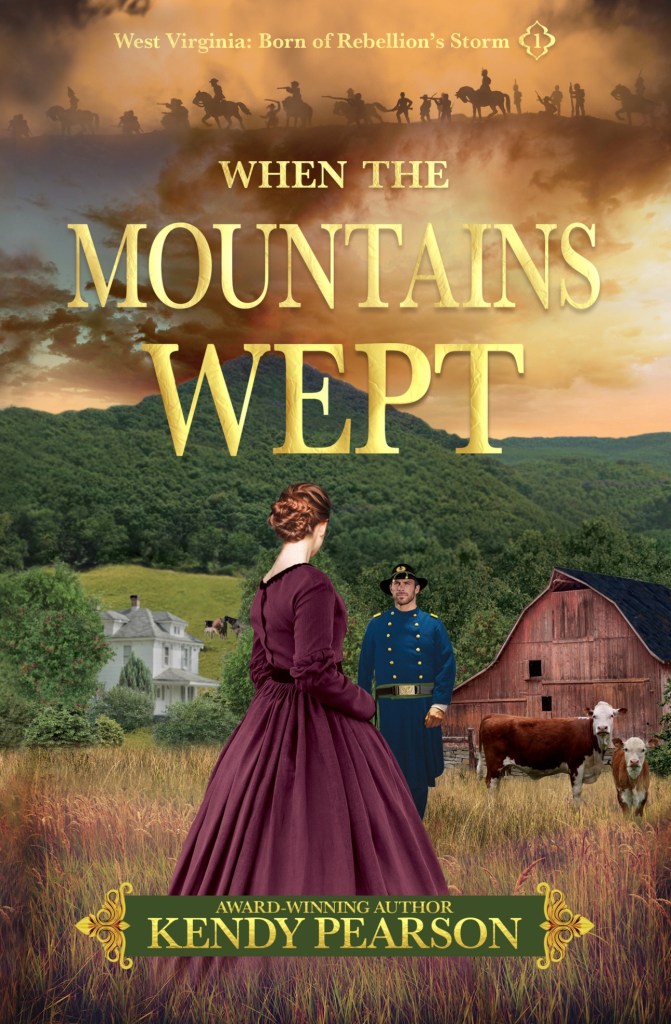
Welcome to the Blog Tour for When the Mountains Wept by Kendy Pearson, hosted by JustRead Publicity Tours!
About the Book
Title: When the Mountains Wept Series: West Virginia: Born of Rebellion’s Storm #1 Author: Kendy Pearson Publisher: Pear Blossom Books Release Date: April 8, 2024 Genre: Christian Historical Fiction
CAPTIVATING CIVIL WAR FICTION INSPIRED BY HISTORICAL EVENTS
Amid talk of war, Augusta Dabney tends her younger siblings and dying father. But when hatred sparks tragedy, peace is but a shattered memory. Heartbroken and desperate, Augusta searches for a way to protect all she holds dear.
Defying family and friends, Dr. James Hill declines a prestigious commission in the Confederate Army to join the Union cause as a Regimental Surgeon. When the Dabney farm becomes a crossroads of colliding forces, Major Hill commandeers their barn for a hospital.
He is running from his legacy, seeking penance for his past.
She is desperate to preserve hers, at any cost.
As a wise, former slave nurtures James’s battered faith, cynicism crumbles, and James discovers grace and belonging with Augusta and her family unlike any he’s ever known, even as he must face the horrors of war and the evil it breeds.
But when James comes face to face with his past, secrets unravel until deception ends in disaster, leaving Augusta with only one option.
Kendy Pearson is a veteran high school teacher and an accomplished musician. She is also a worship leader, Bluegrass fiddler, and Civil War reenactment enthusiast. When she discovers a pocket of American history omitted from the schoolbooks, she enjoys digging in and turning that pocket inside out. Her novels lead fictitious characters through real historical events and settings; engaging with period personalities—and she always includes a romantic thread to warm the heart. Every story is a journey through tragedy, secrets, regrets, and God’s undeniable grace. Kendy is an eight-time award-winning author and enjoys public speaking and teaching writing workshops. She also relishes ice cream, snowy days, fireplaces, and maple trees. Kendy is the mother of four grown children and lives with her sweet hubby and two amusing miniature dachshunds.
Connect with Kendy by visiting kendypearson.com to follow her on social media or subscribe to email newsletter updates.
My Impressions
“Bondage comes in many forms, Doctor. Anger, bitterness, unforgiveness—they’s all shackles—and Massa Jesus, He has the keys. It’s Him who sets a man truly free.”
What is freedom? Kendy Pearson’s Civil War novel, When the Mountains Wept, shows a Virginia family, a wealthy doctor, and the country, all striving for freedom. The South battles the North; the Dabneys try to stir clear of the conflict, declaring, “This isn’t our war,” until finally, they are thrust in the middle of it. Augusta is trying to keep her family’s farm free from the bank, and Dr. James Hill is trying to escape the memories of his past.
I loved the relationships we see in this novel. Gus cares so much for her family and for her dying father. The love between family members is vibrant and alive. I love the faith and calmness that old Izzy brings to the family, as well. He is my choice for a fave secondary character with his intentional words, patience, and compassion for all.
Pearson exhibits a great deal of Civil War knowledge and teaches it through the Union army movements as relates to Dr. Hill’s commission. She also shows the sad division of our nation, even as friends and families splintered. This book is not for the squeamish!
I am glad to see there will be more books, as some family members need more of their story told.
I received a copy of the book from JustRead. I also bought my own copy. No positive review was required, and all opinions are my own.
Notable Quotables:
“We don’t choose our family, James. God does.”
“Wasn’t her own happiness a small price to pay for her family’s future?”
“We need Yo help, Lord—to forgive. We know if’n we don’t forgive them that sins against us, there’s no forgiveness for us. Help us to forgive, lest that unforgiveness grab hold of our lives and pull us down so low we can’t never get up.”
“He, too, believed Virginia was sovereign. But along with that, independence rode an ugly black horse called slavery.”
My Rating
⭐️⭐️⭐️⭐️⭐️
Magnificent! A new-to-me author I’ll be following!
Tour Giveaway
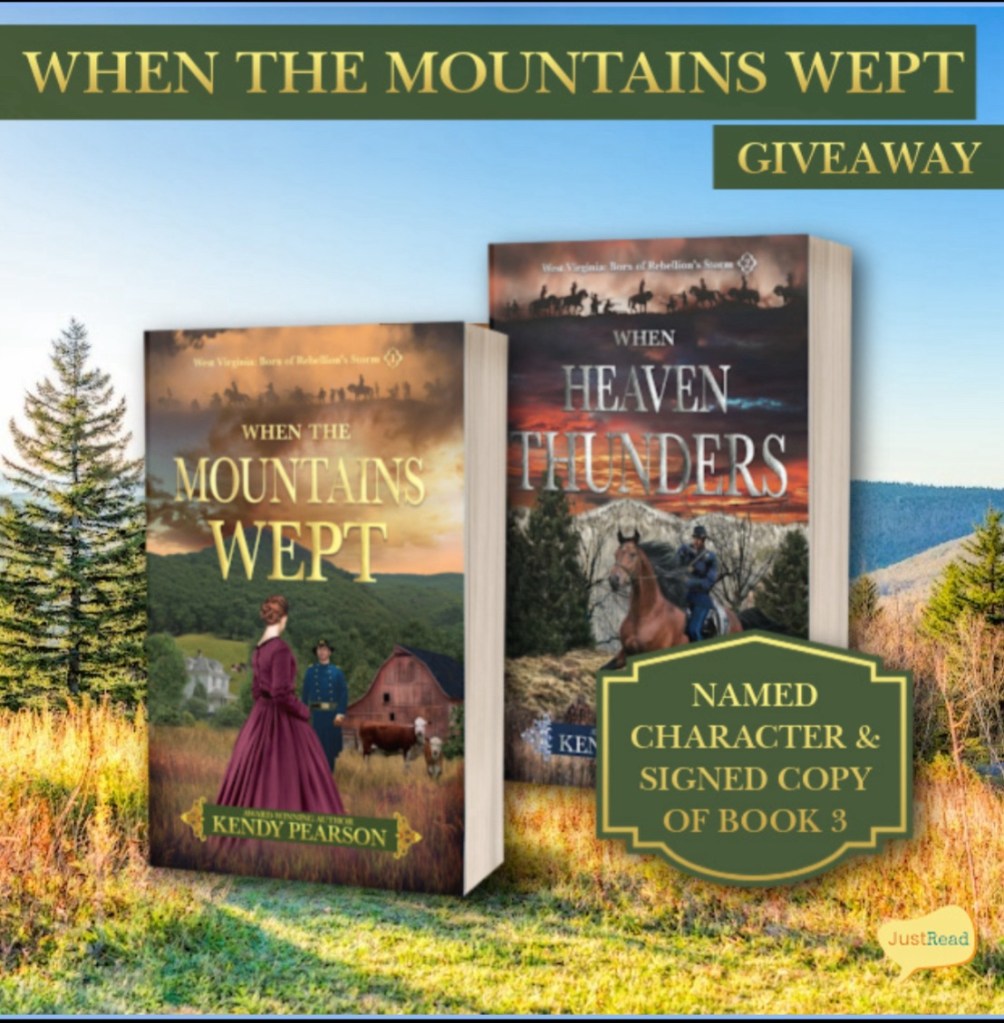
(1) winner will receive signed copies of When the Mountains Wept and When Heaven Thunders, a character named after you in book 3, In Tempest Winds, and a signed copy of that book once it releases!
Full tour schedule linked below. The giveaway begins at midnight November 11, 2024 and will last through 11:59 PM EST on November 18, 2024. Winners will be notified within 2 weeks of close of the giveaway and given 48 hours to respond or risk forfeiture of prize. US only. Void where prohibited by law or logistics.
When death visits Coronado, will secrets of the past keep them from uncovering the truth?
Her entire life, Eleanore Wainright has been molded to fit the ideal society wife in the glittering world of New York’s elite. Her father’s aspirations for her are clear: marry a man of wealth and status, and secure their family’s future. But when she arrives at the Hotel del Coronado with intentions to do just that, Eleanore’s carefully laid plans are thrown into disarray when she comes face to face with Thomas Harding, the man who shattered her heart and disappeared without a trace.
Working as a bellboy at California’s newest and most prestigious resort, Thomas never imagined crossing paths with Eleanore again, let alone amidst the backdrop of a suspicious death.
As the investigation continues and tensions rise, Eleanore and Thomas are forced to confront not only the ghosts of their past but also the secrets that threaten to destroy their future and the futures of those they hold dear. With the eyes of New York’s elite upon them, they must choose between the responsibilities they’re expected to fulfill and the love they’ve always yearned for, risking everything in the process.
Kathleen Denlylives in sunny California with her loving husband, four young children, two dogs, and ten cats. As a member of the adoption and foster community, children in need are a cause dear to her heart and she finds they make frequent appearances in her stories. When she isn’t writing, researching, or caring for children, Kathleen spends her time reading, visiting historical sites, hiking, and crafting.
More from Kathleen
A Christmas at Hotel del Coronado was inspired first by the true events surrounding the tragic death of a mysterious woman that occurred at Coronado’s world famous hotel in November of 1892, and second by the fun antics of Miss Scarlet in the Masterpiece television show, Miss Scarlet and the Duke.
Although Miss Scarlet is a professional sleuth, I chose to make my heroine, Eleanore Wainright, an amateur sleuth who typically puts her keen observation skills to use when secretly writing her own mystery novels. That is, until an unexpected death compels her to use those skills to uncover the truth. Of course my hero, Thomas Harding, gets wrapped into helping her despite the tension of past heartbreak lying between them.
One of the most fun parts of writing this story was seeing Eleanore’s spunky Aunt Gladys support and encourage her niece. Aunt Gladys has an energy and sassiness that belies her years. And today, her curiosity has got the better of her. You see, Eleanore is being stubborn and won’t reveal the title of her current work in progress, so Aunt Glady is snooping through her niece’s room for clues.
To learn more about the true history behind this story, look for the author’s note at the back of the book!
My Impressions
“Secrets truly are the Achilles’ heel of powerful people.”
So many things drew me to this book, A Christmas at Hotel del Coronado. One is that the author is Kathleen Denly, and I always enjoy her historical romance writing! The second is that it is yet another, book eight, to be exact, of the Romance at the Gilded Age Resorts, each book by a different author and often featuring a famous hotel of the time that I don’t know much about. Thirdly, we have visited Coronado Island. The hotel there was much too fancy for our pocketbooks, and it is interesting to learn its background. I could only imagine how beautiful the hotel must have been, all decorated for the Christmas season.
I enjoyed seeing the romance between well-to-do Eleanore and her social underling, Thomas. Would they find a way to figure out what divided them in the past, plus figure out a way forward to renew their shattered love?
I do believe that Eleanore’s aunt is my fave secondary character. She knows the hearts of those closest to her, but keeps confidences. She loves the flawed people around her, and isn’t afraid to encourage them without giving away other’s secrets.
Speaking of secrets, there are some good mystery threads going on in this novel. I really enjoyed the twists, and I think other readers of western historical fiction will, too.
There are a few words of language in the book, but they are, in my opinion, totally appropriate.
Reading the author’s notes is a must!!
I received a copy of the book from the author and Celebrate Lit. I also bought my own copy. No positive opinion was required, and all opinions are my own.
Notable Quotables:
“Novels are nothing more than a poor man’s excuse for not working and a dull-witted woman’s method of passing the time for want of anything worthwhile to do.”
“If God left it up to us to earn His love and forgiveness, we’d all be damned.”
“Precious little is more important than tradition.”
“Surely, God would want her to help, and that trumped any of society’s rules.”
My Rating
⭐️⭐️⭐️⭐️⭐️
So many things to like about this A Christmas at Hotel del Coronado!
To celebrate her tour, Kathleen is giving away the grand prize of an enamel mug, scented candle, A6 journal notebook, ballpoint pen with black ink, and a $50 Amazon gift card!!
Be sure to comment on the blog stops for extra entries into the giveaway! Click the link below to enter.
An Appalachian Girl Seeks a Place to Belong Return to the mountains of 1910s Appalachia with beloved author Pepper Basham to discover Kizzie McAdams’s story.
Kizzie McAdams spent her childhood longing to see beyond the mountains of home, but when her job as a servant in a landowner’s house results in an unplanned pregnancy, her world tips into uncertainty and heartbreak. Disowned by her father, she seeks comfort in the arms of the man who promises to take care of her, but his support is conditional and inconsistent. She finds acceptance in the home of a nearby family who not only offer Kizzie friendship but point her to a deeper understanding of God’s love.
Despite her change of heart, her status as a social outcast brings with it continued threats and alienation so she flees her past in hopes of starting over in a nearby town. But her new world carries many of the same prejudices as the old. It also brings the unexpected friendship of businessman Noah Lewis, a man who lives with the same desire as Kizzie for helping the marginalized.
Unfortunately, Kizzie and Noah’s attempts to help those in need pit them against Noah’s elder brother, a powerful mill owner who holds control of the family finances. Is Kizzie and Noah’s growing romance strong enough to battle family power, social expectations, and Kizzie’s past to capture their happy ending? And when Kizzie’s first love returns to claim her, which future will she choose?
Pepper Bashamis an award-winning author who writes romance peppered with grace and humor with southern Appalachian flair. Both her historical and contemporary novels have garnered recognition in the Grace Awards, Inspys, and ACFW Carol Awards. Her historical romance, The Thorn Healer, was a finalist in the 2018 RT Awards. Her historical romance novels, My Heart Belongs in the Blue Ridge and The Red Ribbon, and her contemporary novels, the Mitchell’s Crossroads and Pleasant Gap series, showcase her Appalachian heritage, as well as her love for humor and family. She currently resides in the lovely mountains of Asheville, NC where she is the mom of five great kids, a speech-language pathologist to about fifty more, and a lover of chocolate, jazz, hats, and Jesus.
More from Pepper
It’s pretty easy to overlook wildflowers.
I mean, until they show off all their pretty colors, especially in the middle of a barren place, then they’re noticed and usually appreciated but did you know there’s a lot more to wildflowers that…meets the eye?
Apart from providing food and shelter for smaller animals and/or insects or assisting bees in pollination, wildflowers can be used as an ingredient for healing remedies and contribute to soil health and reduce erosion.
Especially in places where other plants aren’t likely to grow. They’re known as “hardy” because they can survive all sorts of weather conditions, extreme temperature, animal damage, even drought.
So why am I talking about wildflowers??
Because, in lots of ways, wildflowers are a great example of what hope looks like.
Hope nourishes. Romans 15: 14 “For everything that was written in the past was written to teach us, so that through the endurance taught in the Scriptures and the encouragement they provide we might have hope.” When we recall and reflect on what the Bible says about who we are in Christ, our hearts are encouraged and given the spiritual energy they need to remind ourselves of truth in the middle of hard times and wilderness-living.
Hope spreads – Romans 15:13 – “May the God of hope fill you with all joy and peace as you trust in him, so that you may overflow with hope by the power of the Holy Spirit.” A heart filled with the knowledge of the love of God is a heart filled and “overflowing” with hope…and that hope is contagious. When we know whose we are and what our future looks like because of the One who loves us, we live in joy…even when the storms come.
Hope restores and heals: “Isaiah 40:31 reads, “For those who hope in the Lord will renew their strength. They will soar on wings like eagles; they will run and not grow weary, they will walk and not faint.
Hope protects – Psalm 62:5-6 “Yes, my soul, find rest in God; my hope comes from him. Truly he is my rock and my salvation; he is my fortress, I will not be shaken.” Life is hard. Sometimes, bone-achingly, soul-shakingly hard. If we’re reliant on our own ability to protect our faith or mind or soul, we will fail. We’re not strong enough and neither is any of our human defenses, but God is amply able to protect us from the storms, trials, and droughts that mean to wither our hope. HE is the hero of our heart’s story and he is armed to overcome so we can trust Him with our hope and our futures.
And hope grows in the hard places. Hope does not consist of weak or wishful thinking, it grows out of nutrients squeezed from the soil it has. Hard-won, many times. Romans 5:3-4 “ Not only so, but we also glory in our sufferings, because we know that suffering produces perseverance; perseverance, character; and character, hope.” A life with Christ doesn’t mean that pain is taken away, but there is a promise and purpose in the pain. The promise that God is with us and a purpose that He is making us more like Him.
Hope Like Wildflowers tells the story of hope, but the main character, Kizzie, isn’t relying on her own abilities to keep her hope strong. Oh no! She learned to trust in the only One who is strong enough to BE her hope. He nourishes her heart when her life has turned upside down and she’s been forsaken. He restores and heals her when she’s been broken and cast out. He protects her from dangerous men who try to hurt her, but also he protects her heart from choosing the wrong path. And through the hard places of life, Kizzie’s hope overflows in joy to touch the lives of those around her.
And it’s beautiful and unexpected.
Like wildflowers.
How has God helped bring hope to your life? What trials has His hope helped you through?
My Impressions
“Somehow, even in the middle of broken dreams, God touches the raw, painful remnants with a teensy bit of stardust.”
Pepper Basham invites us back to the 1910s in the Blue Ridge Mountains, where people are still divided by their socio-economic and racial status. This book, Hope Like Wildflowers, is so well-titled! As Basham explains, wildflowers will fight their way up through mountain rock and other areas that one would think impossible soil. Yet, beauty springs out of surprising hardship. It is leaning into the Rock that is bigger and stronger than ourselves that gives strength to endure and overcome. We cannot do it on our own, as Nella encourages Kizzie. “Life is hard, Kizzie. You can look for easy in all kinds of places, but more likely than not, that easy turns to its own kind of hard. The real test is what you do when the hard comes. There’s bound to be more times in life than not that the hard gets too big for your own shoulders. That’s why you need someone bigger, stronger, wiser.”
What a journey you will go on with young Kizzie McAdams. We first see a bedraggled, rejected, pregnant, poor, mountain girl struggling to survive. But as Kizzie begins to spend time with her friends John and Nella, she begins to see there is a different road to life available, if she chooses. One that she will not have to walk alone. At first, it seems Kizzie will get trampled and tossed aside by those who are bigger and stronger. Every decision she makes will have you yearning with her as you see her difficult choices.
Fortunately, Faith is like a muscle. The more you use it, the stronger it gets. As Kizzie makes decisions and moves to leave her old life behind, life actually gets harder in many ways. Will she return to her old ways, to the promised security, or will she continue to step out in faith and love?
Ms. Basham pens her novel with beautiful descriptions of the Appalachians, slices of local color, and great relatable characters with tough choices. While part of a series, this book can stand alone. Highly recommended, especially for fans of Catherine Marshall’s Christy.
I received a copy of the book from Celebrate Lit via NetGalley. I also bought my own copy for my keeper shelf. No positive review was required, and all opinions are my own.
Notable Quotables:
“It’s difficult to smile when your focus is on things that rarely lead to joy.”
“Sometimes the very best folks rise out of a second chance because they know what they’ve been forgiven of.”
“My mama says that our true self rises to the top when we’re mad or when no one’s looking.”-Kizzie
“The Lord don’t want nothing to do with the likes of me, Nella.” “Well, that just goes to show how little you know about the Lord. The broken kind’s who He’s been after from the start.”
“True compassion cared with a steel spine.”
My Rating
⭐️⭐️⭐️⭐️⭐️
Magnificent! What a poignant time to read Hope Like Wildflowers- when Appalachia must again wade through a very difficult time, but is buoyed by the strength and resilience of its people and their hope for the future!
Book: A Hope Unburied (Treasures of the Earth Book Three)
Author: Kimberley Woodhouse
Genre: Historical Romance
Release date: September 24, 2024
Beyond the perilous landscape lies a love that defies extinction. . . .
In the bustling world of paleontology in 1916, Eliza Mills defies societal expectations to pursue her passion. Having published her early groundbreaking papers under a false name, she has finally earned her place at the Carnegie Museum and seizes the opportunity to work at Dinosaur National Monument with a renowned paleontologist. But things in Jensen, Utah, aren’t what they appear. When Eliza gets the chance to dig up bones at a ranch with a dark history, it sparks a chain of events that will rock the very fabric of her carefully constructed world.
Devin Schmitt, Eliza’s closest friend since childhood, harbors unspoken feelings for her but knows he will never be able to win her heart. Just as he vows to give her up for good, Eliza begs him to visit her in Utah for another grand adventure. He reluctantly agrees, and within a few days of his arrival, he and Eliza find themselves entangled in a web of danger where the stakes are much higher than they ever anticipated. Together, Devin and Eliza must hold on to God as their hope as they navigate a treacherous terrain of betrayal to unbury the truth and save Eliza from those who wish to see her fail.
Kimberley Woodhouse is an award-winning, bestselling author of more than forty fiction and nonfiction books. Kim and her incredible husband of thirty-plus years live in Colorado, where they play golf together, spend time with their kids and grandkids, and research all the history around them.
More from Kimberley
A couple of years ago, I asked readers on my Facebook page what they were interested in reading in Christian fiction. When one reader and friend suggested I write about the Bone Wars, I was intrigued and instantly excited. I had no idea how much of a blessing writing the Treasures of the Earth series would be.
I traveled all over western Colorado, eastern Utah and southern Wyoming, looking at the incredible displays of bones of magnificent creatures of our past. Stopping at every tiny museum along the way, and even driving miles and miles into the middle of nowhere to find just the right setting for The Secrets Beneath. But it was going to Dinosaur National Monument in Jensen, Utah that truly helped these three books come to life.
The monument was established in October 1915 by President Woodrow Wilson. The 80 acres encompassed the Carnegie Quarry, where paleontologist Earl Douglass was digging, trying to find intact dinosaur skeletons to send back to Carnegie’s museum in Pittsburgh. Eventually, President Franklin D. Roosevelt expanded the park to encompass more than 200,000 acres.
But this monument wouldn’t exist without the determination of one man: Earl Douglass. I had the pleasure of meeting and spending time with Diane Douglass Iverson, his granddaughter, during one of my research trips. She was generous with her time and memories as she shared her grandfather’s journals and memories with me. The longer we talked, the more the idea for what would be the third book of this series took shape. Though Earl is not a primary character in Eliza’s story, his presence and impact on the science of paleontology is felt through the pages.
In fact, each chapter of all three books has a quote from the book his son created out of his journal entries, titled Speak to the Earth and It Will Teach You. I am grateful to Diane for the opportunity to share his struggles, hopes, and dreams with my readers.
With this last book, I hope you enjoy Eliza’s joyful spirit, as well as her struggles to find her place in this world. She’s a spirited young woman with a passion for fossils and how God has created this incredible planet. You’ll get to visit Dinosaur National Monument with her, seeing the founding of this great national treasure through her eyes. I hope you love visiting there in your imagination and that you get the opportunity to visit on your own someday. But even more than that, I pray that, like Eliza, you find joy and confidence where God has placed you in His story.
My Impressions
“Promise me we’ll always be best friends. That we won’t ever let anything come between us.” ~ Eliza
(BTW- if you don’t read prologues, you will be missing a lot with this book!)
A Hope Unburied ( Treasures of the Earth, #3) by Kimberley Woodhouse is a tremendous conclusion to this series about the Bone Wars. I think this book can stand on its own. Historical fiction has gotten even better lately, as authors are beginning to add mystery, suspense, and danger to the straight-forward historical fiction genre! With dinosaur digs, a woman paleontologist struggling to prove her worth, a forbidden love, the Carnegie museum, intrigue, and plotting behind the scenes, this was one of my highly anticipated novels! Kimberley Woodhouse certainly knows how to slowly tease the reader with bits of the unknown, ( two different mysteries in this case) all the while developing solid, complex characters who discover they still need to grow and change. While most readers may not be aspiring paleontologists like Eliza or best friends to a rich family’s daughter like Devin, we can relate to the insecurities, inferiorities, lack of trust, and trying to do things on our own. Eliza finally is confronted by Devin about her lack of trust. “She’d been trying to deal with everything in her own strength. Once again. Why couldn’t she rest in her Savior? His salvation was perfect. And that was all that truly mattered.”
You will find this novel very captivating and romantic as you race towards the end to find out who is behind the rumors and disasters. You may end up wishing you had a best friend as steadfastly loyal like our hero, Devin. *Sigh.* Sometimes I wonder what we could accomplish as people who understand the feeling of truly being loved by the One Who forgives and loves us most of all.
I received a copy of the book from Celebrate Lit. I also bought a few copies of the book. No positive review was required, and all opinions are my own.
Notable Quotables:
“Attempting to walk in the way of Jesus without actually walking with Him, without letting Him work through her, was a sure recipe for disaster. The fruit of her actions proved that.”
“The battle between science and faith was real. Overwhelming at times.”
“It was exactly as Darwin said, survival of the fittest. Conquer or be conquered. Kill or be killed.”
“But what if He’s disappointed in me too? If He’s decided I’m too much of a problem to redeem?”
“Maybe He needed to get you alone so you would listen to Him. Wholly and completely.”
“Then he could go back home to his routine and work to carve her out of his heart.”
My Rating
⭐⭐⭐⭐⭐
Magnificent!! Kimberley Woodhouse is an A-list author for me!
To celebrate her tour, Kimberley is giving away the grand prize of a $20 Amazon gift card and a paperback set of the Treasures of the Earth series: The Secrets Beneath, Set in Stone, and A Hope Unburied!!
Be sure to comment on the blog stops for extra entries into the giveaway! Click the link below to enter.



















 Babbling Becky L’s Book Impressions