Welcome to the Blog Tour for What Brings Us Joy by Teresa Wells, hosted by JustRead Publicity Tours!
About the Book
Title: What Brings Us Joy Series: The Truitts of Texas #1 Author: Teresa Wells Publisher: Scrivenings Press LLC Release Date: July 15, 2025 Genre: Christian Historical Romance
1895: After losing their Georgia home, eighteen-year-old Delia Truitt and her family move to Blooming Grove, Texas, to work for a relative on a ramshackle farm. Set on helping her family dig out of their impoverished circumstances, she plans to open a dressmaker’s shop, combining her sewing skills and her keen fashion sense. But owning a business takes money she doesn’t have.
Unless she can finish her quilt in time to enter the county fair. The prize money would be just enough to open her shop. Determined and resourceful, Delia sets her sights on success—until her heart takes an unexpected detour when she meets handsome Clarence Parker.
Bent on respectability, Clarence refuses to let his past get in the way of his future happiness, especially after falling for spirited Delia Truitt. But his hopes shatter when headlines declare members of his former gang have broken out of jail and are heading his way, set on revenge. Though Clarence doesn’t regret testifying against the outlaws, he fears his future with Delia is in jeopardy. Clarence will protect her from the killers, even if it means risking their future together.
Can Clarence keep her safe? And will Delia love him after she finds out about his past?
A former teacher and librarian, Teresa Wells treasures a story threaded with redemption and hope. She loves people, history, and studying the Bible. Teresa is a member of Novel Academy and American Christian Fiction Writers Association, where she volunteers behind the scenes. She lives with her family outside of Dallas, Texas. What Brings Us Joy is her first novel.
Connect with Teresa by visiting teresawells.com to follow her on social media and subscribe to email newsletter updates.
My Impressions
“There is nothing of worth apart from God. We were made to fear Him and keep His commandments. Apart from Him, we are nothing.”
I enjoyed this historical romance by new author Teresa Wells. A story of two individuals’ dreams, the novel is woven around the setting of a small Texas town just before the turn of the twentieth century. Each chapter starts with a quotation regarding “crazy quilts” a popular fad among women from about 1875-1900.
Delia Truitt’s family has been forced to leave their Georgia home and rely on the goodness of her father’s brother. Unfortunately, the job and home he offers them give little hope to the newcomers. Delia is independent and progressive. She may not be the best homemaker, but she has a wonderful ability to sew, and uses it to make crazy quilts. They are, as she tells her new beau Clarence, her identity.
Clarence Parker, meanwhile, has a background that he is forced to share with Delia’s family as he asks to court her. As Clarence explains more to Delia about his change of lifestyle, he says, “‘He said God could redeem my past.’ He stopped pacing and faced her. ‘Even though I can’t go back and change things, I can move forward in the right direction.’” Clarence, conscience clear, begins to dream of owning the hardware and carriage store, plus a wife and family.
Every good romance needs a meddler of some kind, right? There are a couple in this book, and one elicits my severe dislike. Why are her machinations not obvious sooner to the other characters?
Besides the romance progression, and dreams starting to fall in place for Delia and Clarence, we get to meet their families and see individual relationships. I really enjoyed meeting Delia’s sister and brothers. Delia’s parents are very caring and encouraging, though her mother is not a fan of her art.
Clarence’s family has had a tougher time. We meet Sallie, who befriends Delia, but there are underlying problems in this family rear their heads. One of Clarence’s early decisions has had repercussions that are lasting and divisive. Will the family ever heal from this? What about the baggage that Clarence carries?
Topics of truth, forgiveness, listening to God, and extending grace to others are sewn into the story’s fabric.
I recommend this book to historical romantic fiction fans and those who enjoy tales of old Texas. I received a copy of the book from JustReadTours. I also bought my own ebook. No positive review was required, and all opinions are my own.
Notable Quotables:
“There’s joy in following the path he’s laid before us. God uses willing people, no matter what the task. He’ll put my talent to use, no matter where He sends me.” – Eleanor Baskin
“Independence is a powerful drug, Delia. It can be life-giving, and it can be lethal.”- Clarence
“Sometimes we must walk a hard road before we find joy. And sometimes, hard roads must be walked, whether or not joy awaited.”
My Rating
⭐️⭐️⭐️⭐️
Great! I’ll be looking for more in this saga of The Truitts of Texas!
Tour Giveaway
(3) winners will each receive a $25 Amazon gift card, a print copy of What Brings Us Joy, and items related to the book!
Full tour schedule linked below. The giveaway begins at midnight July 14, 2025 and will last through 11:59 PM EST on July 21, 2025. Winners will be notified within 2 weeks of close of the giveaway and given 48 hours to respond or risk forfeiture of prize. US only. Void where prohibited by law or logistics.
In the glittering era of the Gilded Age, the heirs of Philadelphia’s Denwall Department Stores navigate family expectations, relentless ambition, and unexpected love.
William Walraven’s picture perfect life is turned upside down when his fiancée jilts him for an English aristocrat and his father refuses to name him as his successor. To prove he’s worthy of leading Denwall Department Stores, Will must open their first New York store under budget and before the Christmas shopping season.
Overwhelmed by disappointment and a nearly impossible deadline, Will has no time for distractions—especially not the captivating bookseller he saves from being crushed by a beer wagon.
Ivy King and her aging grandmother are barely keeping their struggling bookshop afloat. Though drawn to the charming, enigmatic man who saved her life, Ivy has no illusions about her place in the world. It certainly isn’t beside a department store heir whose dazzling emporium threatens to close her family’s business.
Brought together in the wake of an attack on Will’s brother, Will and Ivy find themselves at a crossroads—torn between the expectations that define them and a future neither expected.
Perfect is a clean, wholesome historical romance featuring opposites-attract tension, class differences, a touch of mystery and humor, and an inspirational journey of faith and love.
Kimberly Keagan discovered her love for romance novels at thirteen, often choosing a book over chores. She believes there’s nothing like being transported to another time and place to find a happily ever after.
Kimberly is blessed to have her own handsome hero husband and two wonderful children. After earning a degree in accounting, she enjoyed a career in investor relations, writing financial reports and press releases—terrific jobs, though not very romantic.
Now, she’s pursuing her dream of writing historical romance. Her short stories have been published in Spark Flash Fiction and Short Fiction Break. Kimberly’s debut novel will release in 2025.
When not reading or writing, Kimberly enjoys baking, gardening, watching sports, and researching her family tree.
Connect with Kimberly by visiting kimberlykeagan.com to follow her on social media and subscribe to email newsletter updates.
My Impressions
“Remember, you’re a work of God’s hands. Perfect, just as you are.”– Gran
I think this may be a message every person needs not only to hear, but to assimilate deep in their heart. So many of us feel lacking in some way or another. Ivy King, Kimberly Keagan’s heroine, lacks in many ways. She has a physical disability. She is a lowly shop girl, not of the upper society that William Walraven belongs to. This is important in a time known as the Gilded Age, when old money means everything. I was so saddened to see how far some would take the importance of societal standing, at great cost to themselves or others.
Gran is such an encouraging, wise character, even if she can tend to be a matchmaker. She has to be my fave supporting character. Another character’s behavior arc really surprised me.
After a chance meeting, Will and Ivy meet again and begin to spend time together, even though they realize their attraction would be a forbidden romance. Will sees the notice in Ivy’s small bookstore that encourages small businesses to fight against large department stores. Afraid that Ivy will reject him if she realizes his purpose in being in NYC, he simply tells her that he and his brother Bert are there on business. What will happen when the full truth is revealed? Will both Ivy and Will endure a second case of shattered hearts?
Will’s father is spectacularly hard to please. One of my fave moments of the book happens when Will worries about his father’s heart when Charles finds out Will’s true desires. Bert informs Will, “You give yourself too much credit. God is in control of that situation, not you.” Will Will’s family be able to force him into their expectations?
A very satisfying debut novel from Keagan.
I received a copy of the book from JustRead Tours. I also bought my own copy. No positive review was required, and all opinions are my own.
Notable Quotables:
“We must strive to align our actions with the higher moral principles that God has set before us. This requires honesty, integrity, and the courage to face the truth, even when it is uncomfortable.”
“Oh, dear girl, you’re more than your boots or those practical dresses you wear.”
“I’ll grant that you may not have lied outright, but you purposefully hid the truth. It was a lie of omission.”
“Here he was, trying to prove himself worthy of his inheritance, and instead, he’d managed to alienate the one person—the one woman—who’d made him feel like more than just his father’s son.”
My Rating
⭐⭐⭐⭐⭐
Magnificent!
Tour Giveaway
(2) winners will receive a “Perfect” Tea Time Bundle which includes a lovely tea set, a signed copy of Perfect, and other cozy reader treats—like a candle, stickers, coaster, and bookmark!
Full tour schedule linked below. The giveaway begins at midnight May 6, 2025 and will last through 11:59 PM EST on May 13, 2025. Winners will be notified within 2 weeks of close of the giveaway and given 48 hours to respond or risk forfeiture of prize. US only. Void where prohibited by law or logistics.
Join Speed, the most adventurous pup ever, in “A Dog Named Speed” by Larry Fitzgerald! Speed had a rocky start in life, living in a cave beneath the Blue Mountains of Oregon, battling freezing winters, sneaky coyotes, and even a junkyard keeper with a trigger-happy finger. But Speed’s luck takes a turn when he’s rescued from a watery disaster and adopted by Babe, a young newspaper boy.
As Speed and Babe grow up together, they embark on thrilling adventures in the wilds of Oregon, discovering secret fishing spots and having daring encounters. Speed becomes Babe’s trusty sidekick, and together, they form an unbreakable team.
But it’s not just about Speed and Babe; this story is packed with excitement and surprises! Speed meets Kate, a lively Australian shepherd, and their connection adds even more adventure to the mix. Plus, there’s a deeper message about faith and friendship that will make you think.
If you’re ready for action, friendship, and a heartwarming tale, “A Dog Named Speed” is the book for you. Get ready to cheer for Speed and Babe as they navigate life’s ups and downs and discover the true meaning of loyalty and love. This is a book that will keep you on the edge of your seat and warm your heart at the same time!
Larry Fitzgerald, a retired businessman turned youth soccer coach, infuses his writing, managing, and coaching with an unwavering commitment to Christ’s Commission (Matthew 28:19-20). Concerned for today’s youth growing up without spiritual guidance, Larry took to writing. Larry’s impactful short fiction is showcased in anthologies like “Stories from the Attic” (2022) and “Fortunes” (2023) by AA Inc. Publishing. His stories transcend pages, offering beacons of spiritual enlightenment for a generation navigating a world where God’s presence is often obscured.
More from Larry
Writing the story about Speed and the newspaper boy should have been a slam dunk. All I had to do was remember the years between my ninth and eighteenth birthdays—not all of it, of course, just the time my dog Speed and I spent together, which was, basically, all of it. Getting the story into my computer was easy. The hard part was getting it out of my computer and into the format(s) required for publishing and marketing. That was and continues to be a challenging learning experience. Someday, I may write a book about that.
The great thing about my book, A Dog Named Speed, is that it’s a true story except for the parts where Speed is not with me, alone, or with other animals. Those were imagined but very plausible. The story is told from the dog’s point of view, from heaven, as he awaits his master to join him.
Speed was a stray dog who started following me as I delivered newspapers in a small town in Eastern Oregon. He would not come near me despite my enthusiastic efforts to win his favor. He was afraid of all humans, which I assume came from having been mistreated as a young dog. Our coming together happened only when Speed was desperate and had no choice but to reach out to me.
After that, Speed and I were rarely apart. We shared many exciting times centered on fishing adventures, camping trips, and ball games. Speed and I slept together every night. He followed me to school each day and waited faithfully for me to get home so he could join in whatever was in store for the evening.
The most important thing I observed about Speed was how he treated his master. I knew Speed loved me unconditionally. As the story affirms, there was nothing he wouldn’t do to come to my aid. As this became clear, I began to think about how I treat my Master, Jesus Christ. Was I faithful? Was my every thought about Him? Were my first thoughts when I woke up every morning about Jesus? I am certain Speed’s were of me.
My book was written for young people, but it has found a broader audience as well. Any reader who has ever owned a dog can relate to this story. I am blessed to have owned A Dog Named Speed.
My Impressions
“I want to learn to love my Master like you love me, Speed. With you, it’s so natural.”
Dog lovers and lovers of small-town mid-twentieth century historical fiction will especially enjoy A Dog Named Speed. It’s a semi-autobiographical fictionalized account of the author, Larry Fitzgerald, and the dog he had growing up.
With Speed’s example, we learn about loyalty, trust, and turning from hate to love. “The hate I used to carry was gone…Love for my master had overcome all the hate I once had.” As Speed, the narrator shares many poignant, endearing anecdotes, then often relates them to how we as humans should view our Master, Jesus, or how we need to trust Him and let His love change us. At these points, the story slows a bit to get the points across. I especially enjoyed Hootie, who occasionally appeared with very short messages of faith or encouragement.
I received a copy of the book from Celebrate Lit. No positive review was required, and all opinions are my own.
Notable Quotables:
“Don’t you want to put everything in God’s hands and let Him direct your steps?”
“Hatred destroys. Learn to love.”
“I wanted to make him like me, something he could not ever be. God makes us all unique to serve his purposes, even animals.”
My Rating
⭐️⭐️⭐️1/2
Good. I think that even more readers will be interested in Speed’s stories as the spiritual nuggets are sewn in more seamlessly into the story.
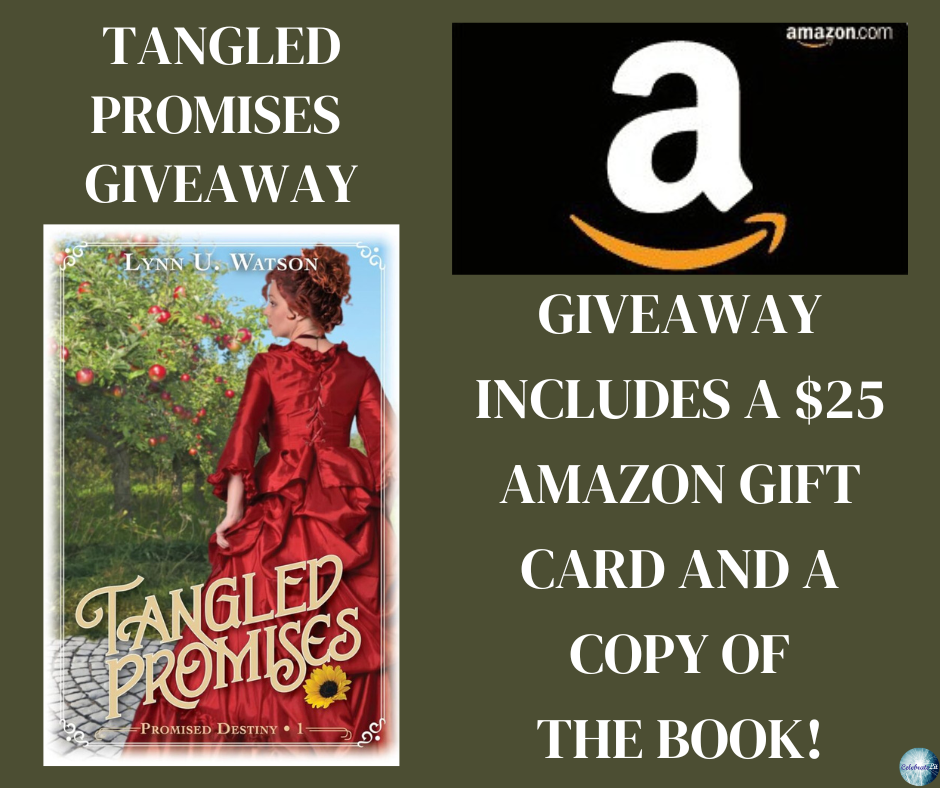
Thunderous applause extinguishes her dream and ignites her worst nightmare.
Clara Reinhold’s father publicly pledges her hand to Georg Wolff. His character and arrogance match the stench of his odious cigars, but his lineage offers a suitable alliance for the station of a baron’s daughter.
A charades clue years earlier turned friendship into a promise of forbidden marriage between Clara and family carriage driver, Daniel Becker.
If she refuses Georg and follows her heart, her father disowns her and she loses everything—her loving family, dear friends, and the only home she’s known.
As a tangled web of scandal and deceit unwinds, hidden motives and illicit activities emerge among an unsuspecting ring of players changing everything but nobility’s rules.
How will justice be served?
How will Clara and Daniel overcome obstacles to claim a future beyond that of a charade?
Lynn Watson is a devotional writer, occasional quilter, reflexologist, and great-great-grand-daughter of a baron from Southwest Germany. Lynn combines her passions and her heritage Stepping Through Time Stitching Stories of Faith Snippets of her family story inspire her fiction writing. She and husband, Steve, make their home in Bartlett, TN, where Jasmine the resident feline considers herself Princess of the Palace.
More from Lynn
My daughter gifted me a tee shirt for Christmas with an image of a typewriter and the slogan: I make things up. That’s a novelist job!
Where we and our family came from and how we arrived where we are today, there’s a story in each of us. I find myself often pondering people’s back stories. I regret knowing only the tiniest bits of my own family’s backstory. When I had the opportunity to ask the questions, I was too naive to know what to ask. Decades later I made it up. Tangled Promises was born.
A recurring theme as I wrote Tangled Promises focuses on this verse: The rich and poor meet together: the Lord is the maker of them all. ~Proverbs 22:2
Clara and Daniel lived in the same world. She the daughter of the Baron and he the family’s humble carriage driver. Very much in love with one another, but their social status dictated rules created to forbid their union.
In a world so shattered by differences, God calls us to see we’re all the same in His eyes. From the unborn baby to kings in the land, we’re all cherished by Him. He calls us to forgiveness and love.
While I’ve published a few devotional books, Tangled Promises is my debut novel and the first book in the Promised Destiny series. Thank you for reading. I pray you love it and are blessed.
My Impressions
“Thunderous applause extinguished her dream and ignited Clara Reinhold’s worst nightmare.”
This debut novel by Lynn U Watson about a daughter struggling to honor her father in an unwanted betrothal was difficult to read. Tangled Promises is much like a fairy tale that seems to promise a nightmare ending instead of a happily-ever-after. It brings to mind the saying , “Who’s afraid of the big bad Wolff?!”
What makes the novel difficult is the logic behind the characters’s actions, specifically that of honoring God and one’s parents, even in such a decision. It seems apparent to Clara, the daughter, and her twin Curt, that Georg, the man Clara is betrothed to by her father’s agreement, is arrogant, mean, and downright dangerous. Yet, Clara’s mother feels she cannot counter her husband’s decision, as a wife should honor her husband. As Clara is reminded of verses to honor her father, she reluctantly goes along with this very unhealthy relationship, which her father can’t seem to see, nor will he explain.
Thankfully, a lot of praying goes on in the book as different incidents happen. Much godly advice is sought, which is good. But I still wonder if an adult child ( at that age) is required to honor a parent ( who is turning a blind eye to true character of the proposed spouse) to that degree.
Watson brings in a lot of different Bible verses in different situations. No long sermons. Just characters quoting applicable Scriptures at the appropriate times.
So much desperation in this book! Clara and Curt and others wonder when God is going to answer. “You know I’m praying, and we must accept God’s answer whatever it is. God sees far beyond what we discern, but I’m struggling with my faith. Does God even see us, Curt?”
If you enjoy justice served, don’t stop reading! Watson uses her characters to come together and ferret out the truth in amazing ways! Also, much distinction is made between those who think they are better than others and those who treat all equally. This is another underpinning of this historical fiction story that will have you favoring some characters and wishing others would see themselves through the eyes of those around them..
I received a copy of the book from Celebrate Lit. I also bought my own copy. No positive review was required, and all opinions are my own.
Notable Quotables:
“A man’s free to choose his entertainment, Mutter.” “Ja, but the entertainment he chooses defines him.”
“I know Who waits to help His children. He’s not a folktale or an imaginary spirit. God’s plan is better than any man’s or a gnome’s map.”
In the heart of ancient Ur, where the gods cast shadows and tradition weaves the fabric of life, Secrets of the Wildflowersunfolds the captivating tale of Miu, a spirited young woman determined to bloom amid the constraints of her culture, family, and the ancient deities that hold sway.
When tragedy strikes, and her beloved brother becomes a sacrifice to the gods, Miu embarks on a courageous journey to break free from the shackles of societal expectations and unearth her true purpose. Inspired by the resilient wildflowers that thrive against all odds, Miu is driven to forge her own path and create a name for herself.
As Miu navigates running her own tavern, friendship with an unlikely courier, and supporting an abandoned child, she finds herself crossing paths with Abram, a figure of significance from the Bible. In their encounters, Abram imparts profound wisdom, revealing that, like the wildflowers, Miu is created to be unique. Yet, he guides her to embrace the very boundaries that enable her to flourish.
Sarah Talbert, a devoted storyteller and explorer of faith, employs her creative writing to inspire spiritual growth. Through historical fiction and other writings, she shares compelling narratives aimed at deepening readers’ connections with Jesus. Sarah cultivates community through discipleship, hospitality, and storytelling, alongside managing a copywriting business that amplifies the voices of other enterprises.
More from Sarah
Secrets of the Wildflowers: Comparing the Ancient Near Eastern Gods with Yahweh
In the ancient civilizations of the Near East, people had a fascinating relationship with their gods. They earnestly sought the blessings of the gods, such as prosperity, reputation, and fertility, but the interactions were often unpredictable. Prayers and offerings were done with a sense of expectation, but people were always aware of the capricious whims of the gods.
When examining the relationship between humans, the gods of the Ancient Near East, and Yahweh, there are two key points to consider:
-Fragile Relationships with the Gods:
Did you know that in ancient Mesopotamia and Egypt, people believed that the gods held power over every aspect of their lives? They turned to their gods for blessings and protection, whether it was for a great harvest or a happy family.
The main reason behind writing “Secrets of the Wildflowers” was to compare and contrast the gods of Miu’s time (the main character) with Yahweh. Miu faces difficulty dealing with the unpredictable nature of the gods while also desiring to pursue her own path, but also needing the blessings of the gods.
-Yahweh’s Guidance and Certainty:
Enter Yahweh, the God of Abram, who presented an unmistakable difference from the uncertain association between humans and the gods in the Ancient Near East. Instead of leaving humanity to figure out the fickle nature of the gods’ goodwill on their own, Yahweh intervened in a significant manner.
Miu eventually discovers that Yahweh wants a relationship with her. He has pursued her from the beginning of the story. She just needs to learn if she wants to bloom free like a wildflower, or if she wants to follow him.
By following Yahweh’s laws, Abram and his people found peace, prosperity, and a divine relationship with God. Obeying His commands blessed them with divine favor and the assurance of His presence.
In conclusion, Miu and everyone she encounters must come face to face with a god who is unlike anything they’ve ever heard of. After losing and redefining freedom, Miu discovers that true freedom is found in working together with others and utilizing her God-given skills within a relationship with a loving God.
My Impressions
“The secret of the wildflowers was they grew wherever they wanted, never to be domesticated by humans. That’s what Miu wanted. Beauty and freedom uncontrolled.”
Wow! To think I almost passed on reading this book! Sarah Talbert’s Secrets of the Wildflowers excites me for several different reasons. There is enough intrigue and suspense to keep the reader rapidly turning the pages.
Miu, a mathematically inclined 16-year-old girl from the ancient city of Ur, hates her prosperous father, a famous jewelry maker for the temple priests. Miu does much to further Badak’s business, but he is all meanness and profit at any cost.
Miu escapes Ur after a great personal tragedy and sails across the sea to the respected city of Dilmun with two sailors, Zaidu and Taku. Both end up being an important part of her life story. Finding a job in a local tavern, Miu is quick to learn, and distrustful of other people. When she finds the tavern owner is just as ambitious as her father, she looks for a way to destroy her. She will not worship the capricious gods of Ur or Dilmun, gods who needed people to serve them, but could as easily ignore or destroy people as bless them.
Taku, so opposite Miu in personality and approach to life from his new friend Miu, helps bring a bit a peace to her otherwise busy, overstressed, overly controlled world. Yet, Taku is being led away from the gods of his childhood, too. “What would it be like to look up at those stars and truly know the god that made them? Could that same god ever care about humans?”
I loved the fact that though Miu loves a few deeply, she is finally forced to see that her controlling nature and refusal to engage a loving community causes her great personal loss. But the one true God of the Universe knows she is searching and doesn’t stop dealing with her until she is ready to forfeit her absolute need to control.
We get to meet Abram and Sarai and their “strange” god. This is the part that I loved most. Not only do Abram and Sarai explain how Yahweh is different from the gods others worship, but He chooses to have a relationship with people, as opposed to being flawed and using people.
I loved that Talbert talks about the gods with the understanding the ancient people of the Middle East had.( You can read her comments in the author’s notes. Our Bible study has been accessing some of the same sources Talbert refers to, and it is so exciting to see someone else have a grip on how important it is to view the Bible from the viewpoint of of the ancient Middle Eastern culture.) This understanding includes the picture the ancients have of the “waters of chaos” and the importance an object or person obtains when it is given a name. “A god or person had ultimate control when they were able to name and call creatures into order and to teach them how to grow a society using math and science. Order gave purpose, but it also gave control and power.”
“Sometimes Miu wished she’d never been named.” – Perhaps this sentence takes on new light in that perspective. Can the Yahweh of Abram and Sarai bring hope to Taku and Miu’s tortured souls? Perhaps they will discover the true secret of the wildflowers.
I received a copy of this book from Celebrate Lit. I also bought my own ecopy. No positive review was required, and all opinions are my own.
Notable Quotables:
“no one does things alone in Ur. I have dear friends, connections, and even some family I rely on. You cannot do business, or life, without a community. “
“if any of those so-called gods wanted something from her, she’d rather die. Anyone with a god that needed a sacrifice of a child to be happy, was not a god she would worship.”
“Thinking for yourself meant defeat. It meant losing the ones you love.”
“She’d make her heart as stone cold as the gods he worshipped until nothing could get inside…She must push forward in this new life or be swallowed by her past.
“He learned to be content with sharing others’ words, even if that meant his own needed to be silent.”
“The thing was, compliments only lingered for a moment, then they were off like a feather floating in the wind. Words were empty, and Hashur and Miu both knew it.”
“There’s always more to have, Miu. It just depends on what you’re willing to do to get there.”
“Since the day I left Ur, I have had to fight for control of my own life and freedom from my father and his life. I want freedom from the gods, freedom from my father, and freedom from the priests’ evil lifestyle.”
“Why did freedom feel so lonely?”
“He who keeps fleeing, flees their own past. One day you must face your own.”
“Yahweh doesn’t need us but has decided to dwell with us. He created the land we live on for people to function and create order so we can walk with him, as they did when the world was first created. And his invitation to dwell with him is why we are leaving. For us to dwell with him, in the land he will show us.”
“Yahweh is almighty and has the strength we need. Sometimes our greatest act of strength is seen in our biggest display of weakness.”
My Rating
⭐️⭐️⭐️⭐️⭐️
Magnificent! I love Talbert’s understanding of the ancient Middle Easterner’s view of the gods and the world. Very different from our Western understanding, but we can really comprehend Genesis the way the ancient Hebrews would have.
Introducing a new series of 6 exciting novels featuring historic disasters that transformed landscapes and multiple lives. Whether by nature or by man, these disasters changed history and were a day to be remembered.
Evelyn Benson’s husband perished in the Bataan Death March but not her faith. The World War II Gold Star widow is taken in by her brother and soothed by the love of his wife and children. Evelyn refuses to cower to grief. She may not understand God’s mysterious ways, but she has never questioned Him—until the circus fire.
The Ringling Brothers and Barnum & Bailey Circus train chugs into Hartford, Connecticut, on a sweltering day one month after the Allies invaded Normandy. Among the roustabouts is a reluctant clown, Hank Webb. He may hide from his murky past behind grease paint as Fraidy Freddie, but God wants to offer Hank a chance to be found. Though first, what little Hank believes about God will endure a fiery trial.
On Thursday, July 6, 1944, a devasting blaze of unknown origins consumes the circus tent along with Evelyn’s hopes and Hank’s anonymity.
Rhonda Dragomir is a multimedia creative who treasures her fairy tale life in Central Kentucky, insisting her home is her castle even if her prince refuses to dig a moat. She has multiple published works in anthologies and periodicals, along with numerous Bible studies studied weekly by more than 10,000 women around the world. Rhonda has garnered numerous writing awards for both fiction and nonfiction, including her selection as 2019 Writer of the Year by Serious Writer, Inc. In 2020 she was also a finalist in ACFW’s Genesis Contest for her first novel, a 16th century historical romance.
More from Rhonda
The heroine’s last living family members are struck down in a tragic fire. Will she crumble? Will she tumble into bitterness? Will she forsake her faith? We view life through her eyes and wonder, “What would I do?”
The best fiction sails the vast sea of human experiences and explores how we survive when storms roil the waters. Triumph, tragedy, victories, valleys—though we have not lived through the exact events as the characters, we feel the same elation on the crests and despair in the troughs of the waves.
This is why I love to write historical fiction, especially romance. I interweave my own thoughts and feelings with those of my characters. My words become theirs, and their responses mirror my own as I fight to keep my head above water.
I spent dozens of hours researching When the Flames Ravaged, the story of a horrific circus fire in Hartford, Connecticut on July 6, 1944. I gasped, I wept, and I marveled at the courage of rescuers who sacrificed their own lives to save others. True, live-or-die battles fueled my imagination, and composite characters leaped to life.
At one point, my hero dives into dark water, grasping with frail human understanding to comprehend the scope of the disaster. He decides good and evil are locked in an everlasting struggle, and humans are mere pawns stuck in the middle. Then he asks, “What is the use of serving God if He won’t protect you?”
Who has never asked the same thing when tragedy strikes? Pat answers and platitudes won’t suffice. Only a personal quest to discover an acceptable answer to this age-old question will help us find peace in the midst of the churning sea of doubt.
I hope my novel will toss a live preserver to everyone treading water.
My Impressions
“Was God with her? Faith chimed, Lo, I am with you always, even unto the end of the world. But doubt quoted Jesus in His darkest hour. My God, my God, why hast thou forsaken me?”
This second book in the Barbour series, A Day to Remember, brings us the horrific story of When the Flames Ravaged by Rhonda Dragomir. Each book in the series highlights a lesser-known American tragedy. As with the first, this was a difficult read because of the intense emotions stirred by the recounting of the Hartford, Connecticut circus tragedy. I had to be careful to recognize why I was in a very despondent mood as I occasionally came up for air as I read.
Both Evelyn, whose close relatives attend the circus that fateful day in 1944, and Hank “Fraidy Freddy,” have some big questions for God after the fire. “How could a loving God…” reiterated over and over as two young people who were once believers in His care, consider that they may not need a God Who wouldn’t prevent such an atrocity. No easy answers are given, but Scripture and wise words are combined at precisely the right time to stir thoughts in a seeking soul.
Slowly, painstakingly so, we follow Evelyn and Hank as they search for Evelyn’s missing family. While the tragedy brings them close, the two teeter between more than friends and persona non-gratis as secrets, guilt, and efforts to be independent take center stage.
I loved so many secondary characters. Bill, Evelyn’s brother. Mrs. Riegle, with her gentle ways, yet determined to be a help to Evelyn. The Preacher. “I’m not really a preacher. I’m simply a man who wants to tell others about how God helps us through our troubles.” Connecticut State Police Sergeant Amato. As one of my favorite people often says, he is the kind of person “who makes your problem, his problem.”
I can’t believe this is Dragomir’s debut novel. It is so well-written. I loved the inclusion of Emmett Kelly (excuse me while I go off to research him a little more, I used to collect clown figurines based on his art). I also had to research the Bataan Death March a bit. I learned so much from this book!
I also loved some twists and the humor. Unfortunately, the tragedy was so severe, there was no humor at that point in the book. But that is real life. I am looking forward to the next book in the series and will also be looking forward to reading more from Rhonda Dragomir.
I received a copy of the book from Celebrate Lit via Netgalley. I also bought my own ecopy. No positive review was required, and all opinions are my own.
Notable Quotables:
“the costume also hid a man wanted for murder. His parents would be spared the shame of watching their son die in the electric chair.”
“A blood moon was expected tonight, and the superstitious circus folk had grumbled all day about the alleged ‘omen of death.’”
“For as the heavens are higher than the earth, so are my ways higher than your ways, and my thoughts than your thoughts.”
“The deadliest enemy at this moment wasn’t the fire, still too far away to be a threat. But panic could kill.”
“The speed with which tragedy stripped a person bare was nothing less than terrifying.”
“It was his fault. Murder. By neglect. Almost two hundred times over.”
“I hope someday you’ll see yourself as God does.”
“We accept blessings from God’s hands every day, but when bad things happen, we blame Him.”
My Rating
⭐⭐⭐⭐⭐
Magnificent! There won’t be a dry eye as you learn about this horrific fire and one lady’s efforts to find her surviving family.
Genre: Historical Fiction/Christian Fiction/Southern Fiction/Black/African American Historical Fiction
Release Date: August 14, 2023
Set in the 1930s, this Southern feel-good novel about a controlling widow and the troubled nephew she’s asked to care for invites you on a journey of faith and surrender while weaving in the amazing true-life character, George Washington Carver.
LaDelle Harris, a fiery 51-year-old widow and head librarian at the Tuskegee Institute, likes things her way: orderly and predictable. So, the last thing she wants is to take care of her 12-year-old nephew, Jubilant, for the summer— or maybe forever. But when her estranged brother, the Reverend Ashton Bartley, suffers a heart attack and she’s asked to look after his son, she can’t say no.
While LaDelle focuses on doing all she can to keep Jubilant from creating chaos in her well-ordered life, it seems Abel Fisher, the manager of the Piggly Wiggly, is taking an interest in her. Amid all that’s happening, Jubilant is bent on returning to Huntsville to be with his daddy.
Can a menopausal woman with a need for control and a troubled pre-teen boy make peace with God and each other as they struggle with their fears and issues? Some gracious neighbors and Professor George Washington Carver may be able to help.
LaDelle & Jubilant isCathy McIlvoy’s first published work of fiction and was initially inspired by her admiration for George Washington Carver. Her interest in him and Tuskegee grew as she taught her sons about this genuine man of faith. She especially wanted her two youngest, bi-racial sons to know about this scientist with his impressive accomplishments and commendable character, who looked like them.
Cathy’s desire to learn more about Professor Carver put her on a plane from California to Alabama, where she soaked up all she could and enjoyed more than one unforgettable meal of catfish, grits, and sweet tea. Her time spent on campus at Tuskegee University, including several visits to the George Washington Carver Museum located on campus, fueled ideas for LaDelle & Jubilantand continues to be a highlight in her life. Cathy was also fortunate to receive an endorsement for her book from Dana Chandler, Archivist at Tuskegee University.
Today, Cathy and her husband make their home near one of their sons in Louisville, Kentucky where she writes, and they minister to pastors, leaders, and missionaries through Standing Stone Ministry. In addition to having four grown sons, Cathy and her husband are blessed with amazing daughters-in-law, a growing brood of grandchildren, and—though calling them a blessing is a matter of debate between her and family members—two persnickety cats.
More from Cathy
“A personal relationship with the Great Creator of all things is the only foundation for the abundant life. The farther we get away from self, the greater life will be.”
-George Washington Carver.
A Note About George and My Journey With Him
Although Professor Carver doesn’t appear in LaDelle & Jubilant until chapter nine, he’s not only an important character, but the impetus for writing the book in the first place!
The truth is, I am fascinated by George Washington Carver and want everyone to know about him. Due to his accomplishments, he was often referred to as “The Wizard of Tuskegee,” “The Peanut Man,” and, my personal favorite, “The Black Leonardo.” An agricultural chemist, professor, artist and more, George was a renaissance man in many ways. Though born into slavery and sickly as a child, God had big plans for him, and George was faithful. He viewed his work as worship to the Lord and service to his community and beyond.
After doing much research about George, the South, and the history of Tuskegee University, it felt surreal to travel to Alabama and spend time where Professor Carver had lived and worked for 47 years. For several days, I soaked up all I could—the George Washington Carver Museum, Booker T. Washington’s home, called The Oaks, the stately brick buildings on campus, and the thriving agricultural area which is still used for instruction. As a middle-aged Caucasian woman, I’m sure I stood out at this historically Black university as I ate in the student cafeteria and roamed the grounds, poking my head into buildings and snapping photos.
After engaging all my senses and imagination while exploring the place George called home for most of his life, I flew back to California with a belly full of sweet tea and my mind full of fresh insight and inspiration. Years after that trip, I finally finished LaDelle & Jubilant!
I hope you are entertained and inspired by my historical, character-driven novel. I also hope it compels you to look further into the life of George Washington Carver.
Happy reading!
My Impressions
“Hey, Wilson,” Jubilant whispered. “Do you think I have a better chance of survival if I jumped out of the bus while it’s still movin’ or lived with Aunt LaDelle a while?” “Hmmm,” Wilson tapped his chin with his finger and considered the question. “I’d say either option only gives you a fifty-fifty chance of survival.”
LaDelle and Jubilant by Cathy McIlvoy is written as a creative way to present George Washington Carver’s story. The reader knows this information going in. Jubilant, a 12- year-old boy, is sent to live with his overly strict aunt, the librarian at Tuskegee Institute, during the Depression. Jubilant’s father is a preacher who has suffered a heart attack. Jubilant is a normal boy, but one without any motherly influence and who has had to grow up in a glass house for any disapproving congregants to throw stones. George Washington Carver’s appearance in the novel arrives slowly.
The story is told simply without extra flowery language. We see fear. Jubilant, who desperately needs love and reassurance, is full of fear of his sergeant-like aunt who wants everything in her life in perfect order. LaDelle is full of fear that a young, undisciplined (as far as she is concerned) boy will upset her whole quiet lifestyle. I was fearful this book would be a difficult read, either because it would be so sad as LaDelle deals harshly with Jubilant at such a pivotal time, or the writing just wouldn’t be engaging.
McIlvoy performs a small miracle as she introduces these two loners to each other, both so needy. Yet, McIlvoy places others in their paths to give them hope. I needn’t have worried about becoming attached to the characters. I quickly cared about both the main characters and loved George Washington Carver, plus other secondary characters. LaDelle was hard to like at first, but both she and Jubilant show so much growth thanks to Carver and other friends. And humor! While a lot of hard situations take place in the novel, McIlroy balances them with great helpings of humor and warmth, which makes for eager and memorable reading!!
Author notes at the end are fascinating. Discussion questions are included. Highly recommended!
I received a copy of the book from Celebrate Lit. I also bought my own ebook. No positive review was required, and all opinions are my own.
Notable Quotables:
“Praise goes a long way to bring out the confidence in a young girl—in a human of any age.”
[For preachers’ kids:]
“Children who had fathers with regular jobs could go on about their business without being noticed or criticized.”
“Joy, by the way, often follows thankfulness.”
My Rating
⭐⭐⭐⭐⭐
Magnificent!! This was a very fun way to learn more about George Washington Carver!
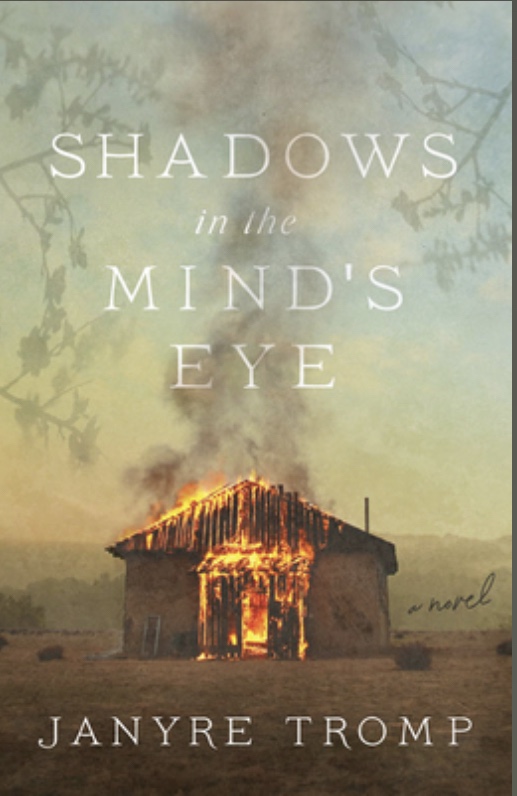
Charlotte Anne Mattas longs to turn back the clock. Before her husband, Sam, went to serve his country in the war, he was the man everyone could rely on–responsible, intelligent, and loving. But the person who’s come back to their family farm is very different from the protector Annie remembers. Sam’s experience in the Pacific theater has left him broken in ways no one can understand–but that everyone is learning to fear.
Tongues start wagging after Sam nearly kills his own brother. Now when he claims to have seen men on the mountain when no one else has seen them, Annie isn’t the only one questioning his sanity and her safety. If there were criminals haunting the hills, there should be evidence beyond his claims. Is he really seeing what he says, or is his war-tortured mind conjuring ghosts?
Annie desperately wants to believe her husband. But between his irrational choices and his nightmares leaking into the daytime, she’s terrified he’s going mad. Can she trust God to heal Sam’s mental wounds–or will sticking by him mean keeping her marriage at the cost of her own life?
Debut novelist Janyre Tromp delivers a deliciously eerie, Hitchcockian story filled with love and suspense. Readers of psychological thrillers and historical fiction by Jaime Jo Wright and Sarah Sundin will add Tromp to their favorite authors list.
My Impressions
“Sometimes God uses broken things to save us … Ain’t no light that can get through something solid. It sneaks through the broken places.”
Broken… that is what so many characters are, in Janyre Tromp’s debut novel, Shadows in the Mind’s Eye. WWII is over, but as the surviving men return home, many face the kind of difficulties that own Sam Mattas and his family.
Wives and other family not going to war attempt to keep the family homestead going, waiting their men’s return. When Sam Mattas reappears, his wife and family are left to wonder how to navigate the much less-than-ideal situation God allows. Is God still to be trusted? Does God have a plan for this mess?
This psychological thriller is immersed in the Southern mountain culture, with the heart of truth only revealed after much emotional upheaval (including on the reader’s part!) First person narrative, alternating between Sam and Annie, made me want to choose sides, then switch repeatedly until my head was spinning. Characters are so multi-faceted and fluid that I found myself identifying with even some of the “villains.” I must admit this novel reminded me of some great classics- not easy to enter into for awhile, but once I did, I felt like I had discovered a treasure by the end!
My favorite character is Dovie May. Elderly, life has not been kind to her, yet she remains full of faith, optimism, and encouragement for others to keep pressing forward. Wisdom is certainly on her tongue.
I received a copy of this book from the I Read with Audra Tour via NetGalley. No positive review is required, and all opinions are my own.
Notable Quotable:
So many, but I will give my fave:
“We think everything eventually goes back to what we want it be. That everything’ll be happy and familiar, the good winning. We never want to travel beyond the point where everybody’s happy. But life’s everything after, and the question is, what are you going to do with the truth life drops in your lap?”
My Rating
⭐️⭐️⭐️⭐️⭐️
Magnificent!! Fabulous Psychological Thriller of WWII Era
About the Author
Janyre Tromp is a historical novelist whose loves spinning tales that, at their core, hunt for beauty, even when it isn’t pretty. She’s the author of Shadows in the Mind’s Eye and coauthor of It’s a Wonderful Christmas.
She’s also a book editor, published children’s book author, and lives in Grand Rapids, Michigan with her family, two crazy cats, and a slightly eccentric Shetland Sheepdog. And if you ever meet in person, you pronounce that first name Jan-ear.
In Shadows in the Mind’s Eye (Kregel Publications),debut novelist Janyre Tromp delivers a deliciously eerie, Hitchcockian story filled with love and suspense as she takes readers back in time to 1940s Hot Springs, Arkansas.
Charlotte Anne Mattas longs to turn back the clock. Before her husband, Sam, went to serve his country in the war, he was the man everyone could rely on—responsible, intelligent, and loving. But the person who came back to their family farm is very different from the protector Annie remembers. Sam’s experience in the Pacific theater has left him broken in ways no one can understand—but that everyone is learning to fear.
When Sam claims to have seen men on the mountain when no one else has, Annie isn’t the only one questioning his sanity and her safety. If there were criminals haunting the hills, there should be evidence. Is he really seeing what he says, or is his war-tortured mind conjuring ghosts?
Annie desperately wants to believe her husband, but between his irrational choices and his nightmares leaking into the daytime, she’s terrified he’s going mad. Can she trust God to heal Sam’s mental wounds—or will sticking by him mean keeping her marriage at the cost of her own life?
Q: The back of the book describes Shadows in the Mind’s Eye as, “A deliciously eerie, Hitchcockian story filled with love and suspense.” In your own words, introduce us to your debut novel.
Charlotte Anne Mattas wants to go back to the way things were before her husband, Sam, left their farm for the war in the Pacific. Sam used to be her protector, but when he arrives home in Spring of 1946, his battle fatigue has everyone questioning his sanity and her safety… especially after he nearly kills his brother, then claims to see men on the mountain where no else has seen them. Are there really dangerous men on the mountain or is his twisted mind conjuring things that aren’t there?
In the tradition of Hitchcock with a hint of psychological thriller, In the Mind’s Eye explores the illness we now call PTSD (post traumatic stress disorder) and persistent love in a world determined to destroy it.
Q: Sam and Charlotte Anne both expected life to go back to normal when he returned from the war, but that doesn’t exactly happen. How was life post-war different from what they expected? How does each of them respond to those differences?
This story actually began while talking to my grandparents over a glass of lemonade. My U.S. History professor had given us an assignment to talk to family about the Depression and/or World War II. Until that point, I’d had no real concept of what the war was like, either for the soldiers or their families back home. I guess I’d thought that the greatest generation slid back into life and easily became the loving people I knew my grandparents were in their 70s. When I discovered that wasn’t the case, I wondered how they had survived the fear and drastic changes.
Like my grandfather, Sam glorified the home front, anticipating a glorious homecoming, delicious food, a soft bed, and an easier life.Charlotte Anne expected Sam to quickly become part of the teamagain as they worked their peach orchard. Instead, Sam has nightmares and reacts to food he used to love (I even gave Sam a reaction to orange marmalade just like my grandfather). Sam tends to jump to conclusions because he doesn’t understand the context, struggles with the physicality of farm work, and is overwhelmed with the amount of work that has to be done since Charlotte Anne wasn’t able to do a lot of the upkeep.
At first, neither Sam nor Annie knows quite what to do with one another, but they’re determined to understand each other.Eventually they each open up to Sam’s mom, Dovie May, and she becomes a healing balm for each of them. If I had to give Dovie a theme, it would be: “You’d think holding joy right up against sadness would shatter a body. But it don’t. Joy, it sneaks in all around, sticks everything together, and finds a way to make you whole. See, light sneaks through the broken places.”
Q: In our current day, we are very aware of what PTSD is, and that it is very prevalent among men and women who have been in the military and seen war. What was known about PTSD back in the 1940s after World War II?
Although the general population didn’t shame WWII soldiers with PTSD symptoms as much as they did their WWI counterparts, WWII era doctors knew little about how to treat trauma of any kind. Battle fatigue, as it was known then, was treated with electroshock therapy (something that was terrifying and had limited success), and many of the men who suffered from it were often divorced, angry, confused, and quietly addicted to drugs and alcohol. Of course, I didn’t want to leave Sam and Annie here, so I dug for treatment options and talked with a few modern therapists.
In my research, those who fared best were often those who lived a little off the grid, in places where they could be physically active, with people who loved them and gave them the space to remove themselves when necessary. Sam also stumbles on a bit of a modern treatment technique by accident. Most folks have heardthat going for a walk can help with mental stability. What isn’t as familiar is that the rhythm of walking combined with talking can actually replicate bits and pieces of EMDR (Eye Movement Desensitization and Reprocessing) therapy which is one of the most successful battlefield PTSD treatments.
Q: What are some struggles Sam deals with upon returning home to Hot Springs? Is he able to hide what is going on from those closest to him or does it become apparent to everyone around him?
Sam’s reactions to “normal” stimulus are off the charts. If he hears a sound or sees a shadow, he immediately jumps into fight/flight/freeze reactions. As is normal for people when they’re first dealing with PTSD, he has no tools to hide his responses and lacks a bit of impulse control. He’s a good, good man with an enormous heart and his reactions cause a horrendous amount of guilt for him. The last thing he wants is to put the people he loves in danger.
As the story progresses and circumstances continue to slide sideways, Sam faces his own mental instability. Imagine watching yourself become more and more unstable and wondering if there’s anything you can do to stop it.
Q: Sam claims to see and hear things going on around him that no one else does. How does Annie deal with what’s going on with her husband?
At first Annie is supportive of her husband and backs him up. She lists all the reasons she believes him: He’s a man she has always trusted. He’s amazing with his daughter. He’s gentle and kind and strong. Unfortunately, circumstances continue to prove that Sam is unstable, and she’s forced to question his sanity. She is rightfully terrified and confused.
To deal with her husband’s instability, she leans on her family—Sam’s mom and brother. They give Annie perspective and help with both the emotional and physical toll of working through unexpected circumstances. One of the things I’m most proud of in Annie is that she doesn’t allow Sam to abuse her even by accident. She holds the line and doesn’t budge from that. It’s something I hope all people do for themselves. That said, Sam is horrified by the fact that he hurt Annie in his sleep and refuses to put her in any further danger. But he also doesn’t give up.
Q: Hot Springs, Arkansas, is an unusual setting for a book. How did you choose the location and how does it play into the story?
Even though the book idea started with wondering how my grandparents’ marriage survived the pressure of war, the book isn’t biographical. So, I needed a setting other than my grandparents’ hometown. For the characters that I was building, I needed a small town. When one of my good friends told me she had an entire book of stories from her family in Arkansas, I jumped at the chance to read first-hand history. Amongst the Hughes family stories, I acquired the basis for Dovie May and Hot Springs, Arkansas—home to the largest illegal gambling racket in the country.
Well, I don’t have to tell you that mobsters and illegal activity are an excellent backdrop for a story with a bit of suspense. The book The Bookmaker’s Daughter by Shirley Abbott confirmed that Hot Springs mobsters operated with full permission of the authorities. In Shirley’s stories, I also discovered the foundation for Charlotte Anne’s father. All of which gave me a location and a cast of characters that could stoke Sam’s fears and make everyone (including the reader) wonder whether or not he was crazy.
Q: What kind of research did you do on the effects of war during that time period? What sparked the inspiration for that part of the story?
As I mentioned, the initial interest came from my grandparents and their stories. But PTSD is also something I’ve struggled with for years. I had some childhood trauma that I worked through back in college. I started writing this book using the nightmares and struggles I had as a kid. Then my daughter became very, very illwhich sparked a new trauma all its own.
That said, battlefield PTSD has different components than the trauma I suffered. To research that, I had several long conversations with a friend who treats battlefield PTSD. She’s the one who reminded me that EMDR is, in essence, any activity thatuses bilateral stimulation to trigger both sides of the brain—thus the positive effects of walking and wide-open spaces. I also read Soldiers from the War Returning by Thomas Childers to get an idea of the authentic story of the men returning from war; The Body Keeps the Score by Bessel van der Kolk, M.D. for how PTSD affects the brain and body; and Wounded Warrior, Wounded Home by Marshele Carter Waddell and Kelly K. Orr, PhD, ABPP to understand the battlefield specific emotional wounds, and how that affects a warrior’s family.
Q: An author often writes part of herself into the story, or at least something she knows about. How have you been affected by PTSD?
There have been long stretches of my life where I was all too familiar with debilitating fear. I still have occasional flashes from my childhood, the rush of adrenaline causing my pulse to pound and hands to shake. I was terrified to have kids, to be the one responsible for their physical/mental/emotional wellbeing. The last thing I wanted was for them to have the same problems I had. But, as Dovie May says, “The best place for miracles is where we don’t fully believe, where our believing has run out.” My husband, Chris, and his family, as well as my good friend, Sarah De Mey,and my mom (who worked hard to get help), have been amazing role models for me as I navigate what it looks like to raise emotionally healthy kids.
All that peace came crashing down when my daughter became ill. She was hospitalized seven times over a few months’ time and the doctors had no idea what caused her illness. After months of visiting doctors to find out why my thirteen-year-old daughter was experiencing increasing abdominal pain, she collapsed at school. What followed was a living nightmare. Doctors found her abdominal cavity full of a fungal infection that quickly went septic. That was the first time we almost lost her. Months later, she’d lost more than forty pounds, and both she and I were wracked with nightmares, an inability to drive anywhere near the hospital, or be in a room with needles. To this day, I can’t smell rubbing alcohol without my body responding with panic.
On paper she should not have survived, and I can’t describe the immense fear that comes from the Pediatric ICU or a parade of doctors. My girl is doing great now, but I don’t think it’s a coincidence that I didn’t finish the book, and hadn’t found the path to hope until after my daughter had walked out of the hospital for the last time.
I’m enormously grateful for EMDR, my therapist, and the grace of God that much of my fear is gone.
Q: The novel includes a good deal of discussion about the nature of evil and the character of God. The characters acknowledge that God doesn’t stop bad things from happening. How do they reconcile the hurt and pain in their lives with their concept of a loving God?
The problem of pain is one that even the best and brightest theologians and thinkers don’t have a perfect answer for. There are pat answers—God uses hard things to make us better or God walks with us through our pain. But when I was in the hospital, totally overwhelmed and crying in the bathroom so my daughter wouldn’t hear me, the easy answers didn’t help. And so I (and my characters) often sit with C. S. Lewis saying, “I never knew grief felt so much like fear.” Fear is the great consumer. Sam is afraid he’s going crazy and that he can’t protect his family. Annie is afraid she won’t ever be able to cope, and that the Sam she marriedis lost forever. And when they (or we) focus on fear, there are no solutions, no ways to move forward because they cannot solve fear on their own. We aren’t trustworthy enough or strong enough to fix it.
And so what do we do?
In the story, Sam says, “If you pop in the middle of the story, you might just mistake the hero for a failure or worse, a monster. But it’s the scrabbling out of trouble and finding the truth deep inside him that transforms that character into a hero of light and goodness.” In essence, “Remember that it ain’t over until it’s over.” I’m a huge proponent of looking for and celebrating the beautiful even when it isn’t pretty. Gratitude isn’t a pretty bandage to slap on a hemorrhaging wound. It is a way to shift your attention while the master healer does his work.
Annie and Sam find their way to gratitude—for simple joys of a birthday Karo nut pie, collard greens, the sunrise, and mostly the people in their lives. Their determination to be the good in each other’s lives is what slowly, over time, turns their attention away from the shadows and back on the life they have. As Dovie May says, “Sometimes God uses broken things to save us . . . Ain’t no light that can get through something solid. It sneaks through the broken places.” It isn’t immediate. And it isn’t easy. But the sunrise always follows the dark night.
Q: How does the imagery of light and darkness, especially in a spiritual sense, weave throughout the story?
Early in the story, Annie says, “A body can hide where the light was closed out, but the devils can hide there just as easy.” The temptation for both Annie and Sam (and all of us, really) is to either give up (wallow in the darkness) or to run away from it (which only keeps us in the darkness longer). While wallowing or running seem like easier choices, they’re also dangerous and far more painful in the long run. Both Sam and Annie try to fight the darkness alone, each not quite trusting anyone else.
Throughout the book, they both learn that the dark places are really where strength starts. Since Sam and Annie are farmers, they come to think of it in terms of seeds. “There ain’t no growth without darkness. You know that better’n most. If you throw a seed atop the soil, it’ll get snatched away by the wind or the birds. You gottabury it in the good, rich soil, and then it’s gotta split open afore it can grow. . .. We were all made to grow and stretch into the sunlight.”
Q: You’ve been on the publisher’s side of things for many years, both in marketing and as an editor working with authors. Have you always wanted to write as well? Has anything surprised you being on the author side?
I didn’t start writing or really even think about being a writer until a few years into my career as the marketing manager for a publisher. I actually started college as a chemistry major and ended up as an English major by default. There’s a whole story in hereabout me being a sassy know-it-all seventeen-year-old punk, and my mom being right. But suffice it to say, the major change was me heeding my mom’s advice to do what I loved (reading).
Anyway, I was freelancing for our editorial department, and our managing editor asked me if I would consider writing a book. It sounded interesting. I wrote a short novel for the middle schoolers I mentored at my church, then I did a few picture books for my daughter, and then I took a long break to raise my kids. When I found time to write a book again, it was so life-giving, I don’t even have words to describe it. I was hooked.
But let me tell you that being an author has changed drastically in the last decade. There’s a much heavier load to lift for authors now—both in terms of tracking story trends and marketing. But it’s also easier than ever to be in contact with readers. I absolutely adore the opportunity to chat with folks about their lives on Facebook, see their pictures on Instagram, and just talk books with the world. It’s crazy to me that I can chat with friends in California and Australia and South Africa and Brazil just by typing (or speaking) into a little box on a screen. I will forever love technology for that.
The writing community also took me by surprise. I don’t think I’ve ever been in a varied group as welcoming and helpful as this group. They’ve been a tremendous support as I’ve worked through edits and marketing and all the highs and lows that come with publishing. There’s so much love and joy there. Julie Cantrell, Rachel McDaniel, Janine Rosche, Susie Finkbeiner, J’nellCiesielski, and so many more have been absolutely amazing.
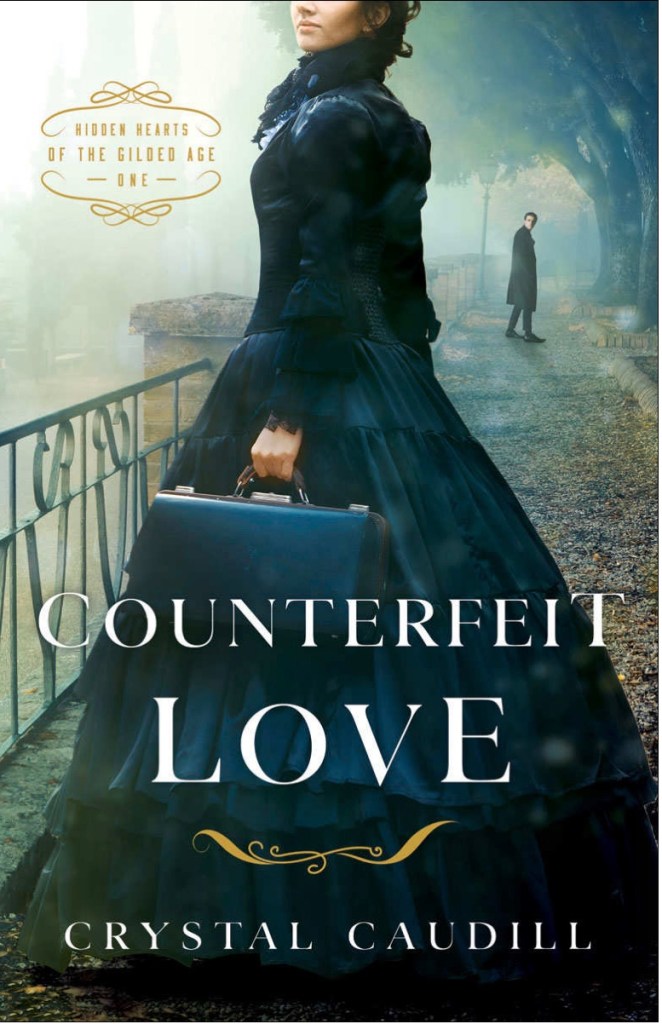
Can this undercover agent save the woman he loves–or is her heart as counterfeit as the money he’s been sent to track down?
After all that Grandfather has sacrificed to raise her, Theresa Plane owes it to him to save the family name–and that means clearing their debt with creditors before she marries Edward Greystone. But when one of the creditors’ threats leads her to stumble across a midnight meeting, she discovers that the money he owes isn’t all Grandfather was hiding. And the secrets he kept have now trapped Theresa in a life-threatening fight for her home–and the truth.
After months of undercover work, Secret Service operative Broderick Cosgrove is finally about to uncover the identity of the leader of a notorious counterfeiting ring. That moment of triumph turns to horror, however, when he finds undeniable proof that his former fiance is connected. Can he really believe the woman he loved is a willing participant? Protecting Theresa and proving her innocence may destroy his career–but that’s better than failing her twice in one lifetime.
They must form a partnership, tentative though it is. But there’s no question they’re both still keeping secrets–and that lack of trust, along with the dangerous criminals out for their blood, threatens their hearts, their faith, and their very survival.
Ah, a deliciously, satisfying debut novel of the Gilded Age from Crystal Caudill. A couple, Theresa Payne and Broderick Cosgrove, once engaged, must determine if they can trust each other and if there is any hope for a rekindled romance. Will they be able to work together to uncover the true counterfeiters in Cincinnati?
Caudill emphasizes themes of trust, forgiveness, and family as she provides plenty of emotion, action, and truth. “Even if… “ is a big question that Theresa grapples with mightily. The novel is well-paced, balancing all the threads together- romance, history, suspense, and life lessons- delightfully.
Broderick is the long-absent love; tall, charming, and witty. But, he is shrouded in mystery. His methods are a little suspect. His results, well, not quick enough for the boss. Is he a man of faith and integrity or one who would play Theresa and his partners for fools?
Theresa is wonderfully headstrong, intensely loyal, and also very intelligent. Is she intelligent enough to figure out her grandfather’s secrets? Loyalty is a great quality if one places it in the right person. Can Theresa discern who to trust with her secrets? Theresa tends to be quick to forgive and allow most people second chances. I loved this about her, but sure rooted for her trust not to be abused!
While Theresa and Broderick are relatable and sure to earn the reader’s loyalty, other characters kept hopping the good guy/bad guy fence for me. What I thought of characters like Isaacs, Lydia, Abraham, Mrs. Hawking, Grandfather and others was variable. This fluidity made the story very suspenseful and I couldn’t put it down!
With thoughtful questions at the end, this would be a good book for a book club discussion.
I received a copy of the book from the author and publisher through I Read with Audra. (I also bought a copy for my keeper shelf.) No positive review was required, and all opinions are my own.
Notable Quotables:
“Nathaniel wronged you, but God convicted him, and he’s a different man now.”
“It’s so nice to be together again. Isn’t it?” Theresa squeezed their arms…”“About as nice as an outhouse in summer.” …”Then I suppose it’s a good thing I have plumbing.”
“Feelings change, and they can lie, but God’s presence is constant and true. Whether we feel Him or not.”
Love, not blood, makes a family.
Family. The word stuck in her throat like a lozenge, melting to soothe an ache she’d long accepted as permanent. Her blood relatives were gone, but the love flanking either side of her pulsed with life and healing. They may not always see eye to eye, but they cared. More than that, they wanted her.
God answered Theresa’s prayers this time, but that didn’t mean He would in the future. Could she trust Him with what little she had left? But trust didn’t mean she’d get what she wanted. So what did it mean?
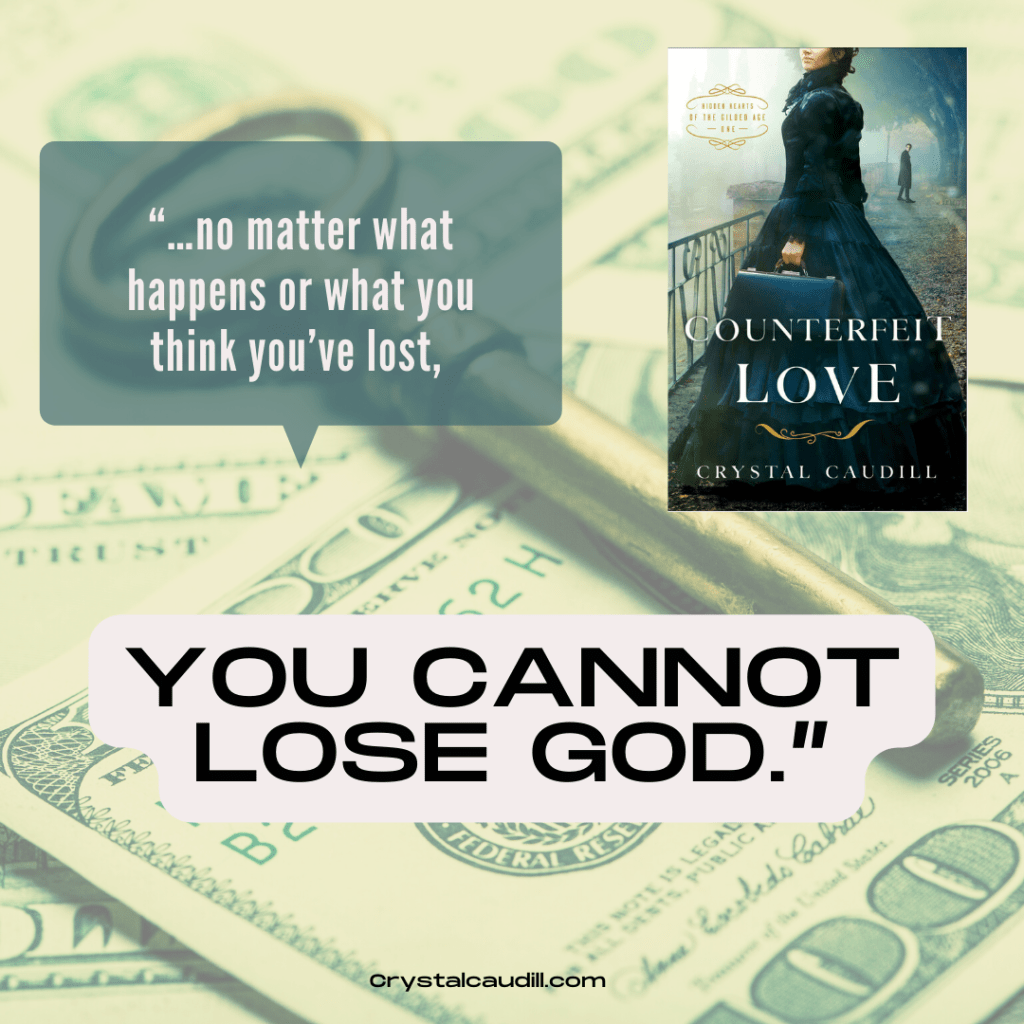
“…no matter what happens or what you think you’ve lost, you cannot lose God….
My Rating
⭐️⭐️⭐️⭐️⭐️
Magnificent!! This is a Satisfying Debut Novel of the Gilded Age, and I’m looking forward to the next two in the series!!
About the Author
Crystal Caudill is the author of “dangerously good historical romance,” with her work garnering awards from Romance Writers of America and ACFW.
She is a stay-at-home mom and caregiver, and when she isn’t writing, Caudill can be found playing board games with her family, drinking hot tea, or reading other great books at her home outside Cincinnati, Ohio.
Andrew Grayson thought he had everything… until he met her.
The indulged son of wealthy parents, Andrew has always gotten whatever he wanted almost before he knew he wanted it—clothes, gadgets… even a car! What more could a young man desire?
Enter Annabel Thompson. Freakshow mermaid extraordinaire… in a wheelchair!
Of course, her beauty attracts him. How could it not? Add to that a kind heart, and Andrew can’t help but fall for her.
Annabel’s connection with the freakshow repels his parents and their society friends. They want him to sever all ties with her and his new friends. Oh, and marry the “right” girl with the “right connections.” But he won’t do it. He’ll defy them and marry his little mermaid.
When Annabel turns up missing, declared dead, things don’t add up, Andrew begins asking some difficult questions, the most important being, “What happened to the little mermaid of the Coney Island freak show?”
Find out in this next book in the Ever After Mysteries, combining beloved fairy tales and mysteries. Silencing the Siren offers a retelling of “The Little Mermaid” that will keep you gripped to the edge of your seat as you watch the story unfold.
The seventh in the retold fairytales series, The Ever After Mysteries, Silencing the Siren by Denise L Barela takes place in 1920s New York City and Coney Island. Andrew Grayson is a sheltered, young, rich man who lives in a Central Park mansion, but falls in love with Anabelle, a circus performer on Coney Island.
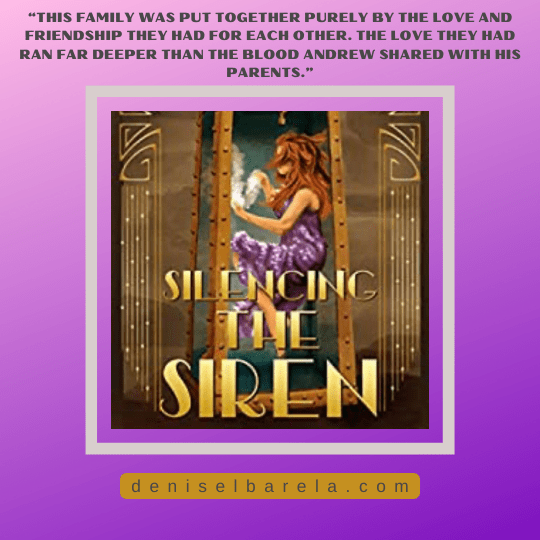
This is an imaginative retelling of the Little Mermaid. I loved seeing the closeness of the circus performers, who though mostly unrelated, form their own tight family. “This family was put together purely by the love and friendship they had for each other. The love they had ran far deeper than the blood Andrew shared with his parents.” I loved the way they care for and protect each other. Acceptance and love are freely given within the circus confines, things that are sadly lacking from the more affluent and “righteous” community without.
I love to zero in on secondary characters that I would enjoy meeting, often because of the way they treat others. William and Amalia are those people in this tale. Discerning, caring, quick to forgive, and to aid others, they almost need their own story!
Great twists to complete this fairytale! Don’t miss your chance to find out whether the Siren is silenced for good!!
Notable Quotables:
“Anger clashed and rolled with the grief inside him. A war of fire and ice with no clear winner.”
“This city cared about no one but themselves. They had no compassion, no love, and no heart. Why couldn’t these people just open their eyes to the struggles of their fellow men? Why couldn’t they see that while they obsessed over societal expectations and positions, others had to exploit their differences just to survive?”
I received a copy of the book from Celebrate Lit. I also bought my own copy. No positive review was required, and all opinions are my own.
My Rating
⭐⭐⭐⭐
Rating: 4 out of 5.
Great! Imaginative Retelling of The Little Mermaid
About the Author
Denise Barela’s passion for fiction, her faith, and general creativity define her life. In all things, she strives to glorify God, though especially in and through her writing. She has spent the past six years working for a publicity company and five years working as the head editor for a publishing company. With an MFA in Creative Writing and a Professional Writing certificate, Denise enjoys using her education and work experiences to help authors achieve their own writing dreams. When she’s not working away at her desk, you might find her reading a good book or following Alice down the rabbit hole…
More from Denise
Hello Readers!
I’m so excited to share Silencing the Siren with you! This book was so much fun to write and research. I learned so many fun facts about old cars, old New York, and even doorbells!
Yes, you read that correctly. Doorbells.
These noisy items were such a novelty in the 1920s that they were often given as Christmas gifts!
Crazy, right?
I wanted both Andrew and Annabel to represent that feeling we have all experienced at least once in our lives. That feeling of not belonging. It looks different for each person, but it’s a uniting feeling.
Annabel will never be accepted by those outside her family, but they more than make up for that. Andrew is popular and well-off in society, but as he comes to know the Lord, he starts to feel that rift with his superficial friends and family. It’s with other believers, Annabel’s family, that he finds that deep relationship he desires. They are more than willing to provide.
This is the beauty of the body of Christ. When we are sick or in need, the body of Christ comes together to support you in that time of need and extend Christ’s love to all corners of the globe.
I hope you enjoy reading Silencing the Siren as much as I enjoyed writing it!





























 Babbling Becky L’s Book Impressions