Becky’s Book Reviews with a Bent to Christian Historical Fiction, Biblical Fiction, and Cozies!
Author: Babbling Becky L
I am a first and foremost a follower of Jesus Christ. Having formerly taught elementary school, I am now a retired special education para-pro. I miss our amazing students! I am married with three great young adult children, one married in South Carolina. My husband and I are empty-nesters but share our home with a huge tiger cat and a playful Shih-Tzu, plus often the granddog. More time for my fave past-time now-reading!😊
He can procure anything, except his heart’s deepest wish. She might hold the key, if she’s not discovered first.
Chicago, 1933―Lucia Critelli will do anything for her ailing grandfather, including stand in a breadline to have enough food to make him a St. Nicholas Day meal. When she catches the eye of a goon who threatens her grandfather, she discovers the end of Prohibition doesn’t mean the end of the mafia’s criminal activity.
Retired Marine Scout Giosue “Gio” Vella can find anything, especially if it helps a fellow Italian immigrant, so he has no doubt he can locate his neighbor’s granddaughter, who has gone missing from a local church. Keeping her safe is another matter. Especially when he chooses to hide out with his Marine buddy in Eagle, Wisconsin, the site of a barely-held truce among striking dairy farmers.
Will Christmas bring the miracle they all need or will Gio discover there are some things even he can’t find, particularly when he stumbles upon the most elusive gift of all: love.
As Silent as the Night is the Christmas novella to To Stand in the Breach and A Strike to the Heart.
“I find things, Mamma.” But can Gio find what’s really in his heart and reveal it before the opportunity has passed?
Danielle Grandinetti starts out her third novella, As Silent as the Night, in The Strike to the Heart series, with a bang. She wastes no time in setting the stage for the romantic interest and the suspense. Without gore, we are introduced to the post-prohibition world of some of the kingpins of Chicago mobs and their machinations. And, as usual, Grandinetti creates characters you absolutely love because of their big hearts.
Enter Gio, whose story I have been eagerly awaiting. An Italian immigrant, he learns to compromise successfully with both sides of mob gangs in Chicago, so he can feed and care for his fellow immigrants. Gio has a heart of gold, plus he is street-wise, but he has one problem. He can’t allow himself to get close to the one person, Lucia, he is really coming to care for.
Lucia finds herself in danger from the mob. While Gio offers to keep her safe, he can’t protect her heart. Gio’s inability to share his heart and past lead to trust and safety issues for Lucia.
Grandinetti brings in some issues that are as true today as they were then. “…being an American-born Italian left her feeling as if she belonged in neither world, Italian nor American.” This is still true today for anyone who is recognized as part one heritage, and part another. Even in these “tolerant days”, both groups refuse to admit acceptance of someone less than their ideal of perfection. How terribly sad and isolating!!
With the sprinkling of Italian words, culture, close, warm family ties, humor at some pretty tense points, and old friends from the first two books, you will be mesmerized by this Christmas romantic suspense.
While this can be read as a stand-alone, I highly recommend reading the books in order: 1) To Stand in the Breach 2)A Strike to the Heart 3)As Silent as the Night
I am a launch team member for this book. I received a copy from the author and Celebrate Lit, and bought my own ebook plus paperback. All opinions are my own.
My Rating
⭐⭐⭐⭐⭐
Rating: 5 out of 5.
Danielle Grandinetti has quickly become my fave historical romantic suspense author! Realistic, Flawed heroes and heroines who love God, want to follow him, and are the kind I would want to introduce my own kids to.
About the Author
Danielle Grandinetti is author of A Strike to the Heart and To Stand in the Breach. She is also a book blogger at DaniellesWritingSpot.com. Her short stories have appeared in several publications and her writing has won the University of Northwestern Distinguished Faith in Writing Award. Originally from the Chicagoland area, she now lives along Lake Michigan’s Wisconsin shoreline with her husband and their two young sons. Danielle especially loves quiet mornings served with the perfect cup of tea.
More from Danielle
I have this memory, from when I was a little girl, of Christmas at my grandma’s house. The table was expanded to hold a dozen people. The little Christmas tree stood on a table before the window, the Nativity beneath it. A gingerbread house sat on the radio cabinet, which played my grandpa’s old Christmas records.
In the kitchen, my Italian grandma, now a widow, had on a ruffled apron as she cooked the Christmas meal. She had short, graying black hair, perfectly curled, and large, round glasses. And, was still taller than me, though she was under 5 foot in height.
Through the haze of childhood memory, I can’t recall everything she cooked that Christmas, I just know it filled the table to overflowing. I can guess who celebrated with us, but I know the large table was completely surrounded by people I loved. And, I’m sure I received gifts, but that’s not what I remember from that day.
What fills my memory is the feeling of family and the love my grandma showed us, through food. My full belly. My contentment. The wonder of the holidays. All through the eyes of my young self.
In As Silent as the Night, I attempt to capture some of this nostalgia, lace it with suspense, and wrap it in romance. I show about some of the traditional holidays celebrated by my characters, from St. Nicholas Day to Christmas Eve. And, while Gio can find anything, love eludes him. However, Lucia may hold the key, but he must first save her.
Silent as the Night concludes my Strike to the Heart series, which began with prequel novella To Stand in the Breach. As sad as it is to say goodbye to the farmers of Eagle, Wisconsin, I have loved sharing the stories of Katy and Joey, Lily and Miles, and Gio and Lucia with you. I hope you’ll enjoy this last installment and I look forward to sharing more stories from other places with you.
To celebrate her tour, Danielle is giving away the grand prize package of a Bag of Books Bundle, which includes a signed copy of each book: To Stand in the Breach, A Strike to the Heart, and As Silent as the Night, plus a Donkey Tote to carry the books!! (https://www.etsy.com/listing/1130961309/donkey-canvas-tote-bag-heavy-duty)
Be sure to comment on the blog stops for nine extra entries into the giveaway! Click the link below to enter.
Mabel plans to bring the thrills of volunteering to the masses—if she doesn’t go to the dogs first.
When Mabel finds herself sharing a thicket with a dead body while volunteering with canine search-&-rescue, her life has clearly—once again—gone to the dogs!
After her losing her job at age forty-nine, Mabel thought she’d turned things around. Now she’s doing good by volunteering, and surely, she’ll soon be a successful author, writing about her experiences. After solving two notorious decades-old cold cases while serving as a historical society volunteer, she’s already getting invitations to appear on TV.
Her new assignment couldn’t be simpler. All she has to do is hide in the woods and let Millie the search dog practice finding her. But to her horror, Millie finds more than Mabel—there’s a dead body hiding in the same patch of brush. To make things worse, Mabel’s maybe-boyfriend, suspended PI John Bigelow, has a dark history with the victim.
While struggling with maid-of-honor duties for best friend Lisa, a string of disasters created by handyman Acey, and a disagreeable new neighbor, can Mabel solve another murder in time to save John’s detective license—if not his neck?
If you like clean cozies and laughing a lot, Mabel Goes to the Dogs by Susan Kimmel Wright should be on your must-get list. I prepared for this book by reading the two that came before it, and I wasn’t sorry. There is a chronological progression to the books that will be more enjoyable if they are read in order. They are all fast reads, but far from silent! I felt so bad for my husband in the same room as I burst out in laughter so many times while reading.
One reason this book appealed to me is that Mabel is an older sleuth, pushing 50 when the series starts. She isn’t stick-thin, isn’t beautiful, and has just been fired from her career job. She likes to exaggerate freely, about her wanna-be careers as either an author or a volunteer. Mabel talks about her forthcoming book in a tv interview. Unfortunately, “Mabel knew “next book” was a slight stretch. The only other “book” she’d ever written was a biographical booklet for the historical society.” Mabel is rather hapless and hopeless as a heroine, and somehow that makes her very relatable!
John, the love interest, is an enigma, waiting to be unraveled. Why doesn’t he have his PI license anymore? Why does he share so little of himself? And, in this book, you may wonder what his real motives are, and why he is putting moves on Mabel instead of staying with the beautiful ex-girlfriend we meet.
Acey is the hired handyman who is anything but. He sure brings his share of the laughs at poor Mabel’s expense!
Animal lovers will rejoice to see more of Barnacle, Mabel’s lumbering dog that lives up to his name, and her snooty cat Koi, as well as John’s cat, one to beware of.
Plus a search and rescue team is involved in this novel, so more delight for canine lovers.
I received a copy of this book from Celebrate Lit. (I also bought my own copy.) No positive review was required, and all opinions are my own.
My Rating
⭐️ ⭐️⭐️⭐️
Great!! I’m anxious for Mabel’s next volunteer stint!!
About the Author
Susan Kimmel Wright is a child of the Appalachian Mountains. A former lawyer, Susan has published three children’s mystery novels and is a prolific contributor to Chicken Soup for the Soul books. Mabel Goes to the Dogs, Book Two in Mysteries of Medicine Spring, her first cozy mystery series for adult readers, is now available from Mountain Brook Ink. Susan shares an 1875 farmhouse in southwestern PA with her husband, several dogs and cats, and an allegedly excessive stockpile of coffee and tea mugs.
More from Susan
A bit about Mabel and how she got herself into this situation…
One of the great joys of writing this series has been the wonderful reaction my main character Mabel has gotten from so many readers. Typical comments are: “I love how quirky and imperfect Mabel is…Mabel is a fun character with a big heart who has the best of intentions.” (I also hear “hilarious” a lot… 😉)
Mabel is fifty, and her entire life has just unceremoniously changed. For the past twenty-three years, she’s had a job as a low-level attorney in a law firm. Boring, yes, but every day, she knew where she was going, what she was doing, and when and how much she was going to get paid. But suddenly, she gets the ax, and her old life is over. Blessed with a severance package from her former employer, as well as an inheritance from her grandma (also named Mabel) that includes a cluttered Victorian house in the town of Medicine Spring, Mabel resolves to reinvent herself. She will do good by volunteering while building a glamorous new career as a writer.
Many readers have told me they see themselves in Mabel. As one reviewer said, “She’s a bundle of insecurities ironclad in over self-confidence and I can relate to that!” And I guess I do too! While Mabel is certainly a product of my imagination, she also reflects a bit of me. I left my job as a lawyer after about twenty years too (though I didn’t “get the ax!). I also live in a somewhat ramshackle Victorian farmhouse with a bunch of animals, and I see many of Mabel’s insecurities in myself. (Not to mention Mabel’s love of food—writing about Mabel’s diet gives me the opportunity to indulge in all the yummy things I try to limit in real life!)
Of course, nothing goes according to Mabel’s master plan. Mabel knows little about writing, her new old house is stuffed to the rafters with her grandma’s accumulations and comes with a hostile neighbor bent on continuing a decades’ old feud, and her first volunteer endeavor comes complete with a dead body. On the plus side, Mabel and her cat Koi acquire a new family member—Grandma Mabel’s big dog Barnacle, and Mabel seems also to have acquired a possible boyfriend, suspended PI John Bigelow.
By the time we run into Mabel in Mabel Goes to the Dogs, she has stumbled through two homicide investigations and also discovered the solution to an eighty-year-old cold case—the ax murder of a father and son in a neighboring historic house. This has gotten her an invitation to appear on a local morning TV show—and little else. Then Mabel undertakes a new volunteer assignment, helping train search-and-rescue dogs. The discovery of yet another body makes her wonder if she’s somehow bringing this on herself. Boyfriend John assures her, “You’re not causing dead bodies with the power of your mind, you goof.” Mabel isn’t so sure. Nobody else seems to be having this problem.
At least, life is now far from boring in the village of Medicine Spring…
After capturing a murder on her camera, photographer Amy Baker becomes the next target—but her identical twin is killed instead. Now on the run with her sister’s newborn, Amy has only one person to turn to—Detective Keith Young, her childhood crush. But when they discover Keith is the baby’s father, can he regain Amy’s trust to keep them safe…before the killer strikes again?
“…could she let go of her pride and hurt, and let him into her heart?”
Twin Murder Mix-Up is the second book I’ve read by Sami Abrams. I enjoyed this one as much as the first and am adding Abrams to my list of go-to authors for exciting, non-gruesome, romantic suspense.
In the wrong place at the wrong time, Amy Baker witnesses a murder. Trying to eliminate her, the murderer mistakenly kills Amy’s identical twin. When childhood friend Keith Young originally refuses to help, then reluctantly gets involved, can the two get past their own issues and the past itself?
One bad choice leads to another, until Keith cannot face himself or his former best friend. It doesn’t help that Amy’s attitude can be toxic. “if her jabs were firebombs, he’d be burned to a crisp.” I think Keith is very courageous to take on Amy’s protection, when he knows he will likely get burned. I wanted to judge Keith for being so slow to come clean with Amy and for not responding to her for so long. But honestly, Abrams nailed human nature here. Unfortunately, Keith doesn’t realize his biggest roadblock to his relationship with Amy is himself.
Amy has her own issues. Besides the past, she cannot get over her own well-hidden inferiority complex. This type of mental block can sabotage a relationship all by itself, no help needed from other sources! Needless to say, I found Abrams’s characters very realistic.
My fave character? This would have to be Keith’s dad, Ian, if we don’t count the baby. Ian possesses a quiet confidence and an ability to confront truthfully without being abrasive. While he is Keith’s dad, he is also able to be a great surrogate dad for Amy, yet without coming between the two.
I received a copy of the book from Celebrate Lit. No positive review was required, and all opinions are my own.
Notable Quotables:
“Regret wrapped around him like a blanket.”
She might be angry at Keith, but there was no one she wanted more to keep them safe. If only she could fully trust him.
“He had to trust those around him and, ultimately, God to safeguard Amy.”
My Rating
⭐️⭐️⭐️⭐️⭐️
Magnificent! Sami Abrams is a name I look for in Romantic Suspense.
About the Author
Sami A. Abrams lives in Northern California, but she’ll always be a Kansas girl at heart. She loves to travel and watch sports. However, most evenings, you’ll find her engrossed in a romantic suspense novel. She thinks a crime plus a little romance is the recipe for a great story.
More from Sami
#Authorproblems That’s what the excitement around Keith Young was…a problem—Kinda. Lol!
When I started to hear requests for his story, I panicked. Authors don’t want to disappoint their readers. And being new to the published scene…Well, you get the picture. 😊
After the release of Buried Cold Case Secrets, many readers told me they wanted Keith’s story. In fact, the overwhelming response puzzled me. What had I done to create such a buzz about Jason’s partner? And of course, I had to ask why?
The general answer I received…Keith’s a nice guy and the perfect partner.
I have to admit, I got a little nervous since I had already written his story. And I worried if I’d done his character justice?
However, after writing Buried Cold Case Secrets, I knew Keith had to have his own story. He’s such a great guy and needed his happily ever after. So, I dove in and asked, what would happen if he made a huge mistake? Not just a physical one, but a heart one.
By the time I finished, I loved seeing Keith and Amy move past their poor choices and hurt to find acceptance and love. The perfect ending to Keith’s struggles.
All that to say, I hope you love Keith and Amy’s story as much as I do. #TeamKeith
To celebrate her tour, Sami is giving away the grand prize package of a $25 Amazon card and signed copy of Twin Murder Mix-Up (US only) or eBook for outside the US!!
Be sure to comment on the blog stops for nine extra entries into the giveaway! Click the link below to enter.
Visit historic American landmarks through the Doors to the Past series. History and today collide in stories full of mystery, intrigue, faith, and romance.
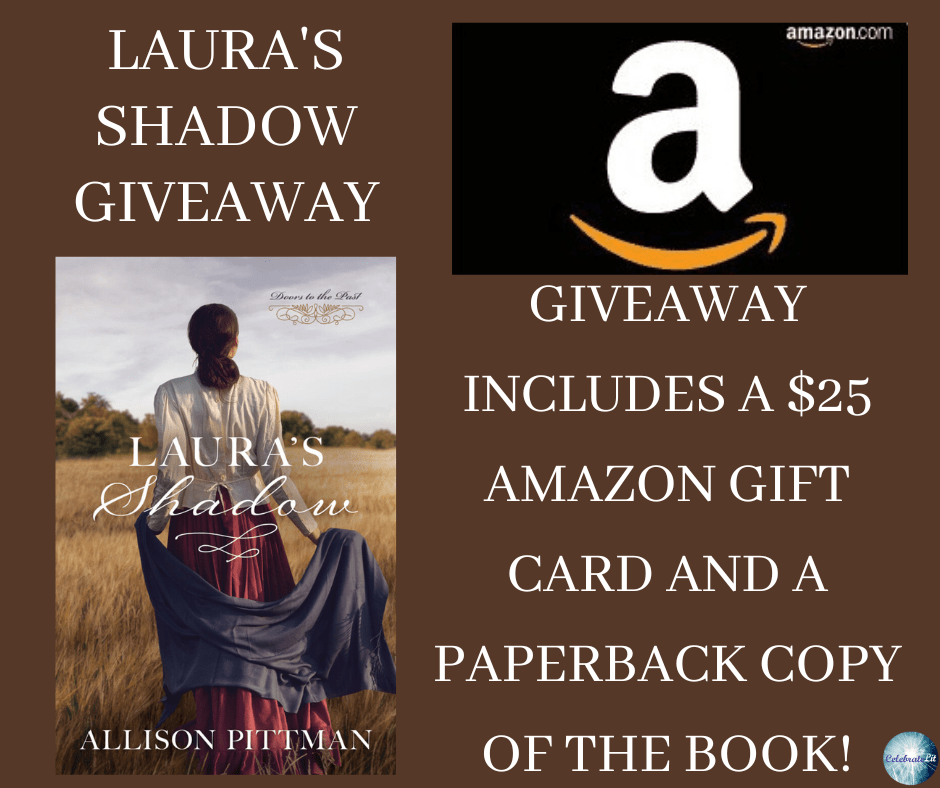
De Smet, South Dakota—1890 Young women growing up in DeSmet live by two rules: don’t go out in a snowstorm and don’t give your heart to Cap Garland. Young Mariah Patterson only managed to obey one. Orphaned and having devoted her youth to scrapping out a life with her brother Charles, Mariah finds herself with no interesting suitors or means of support. Throwing caution to the wind, she seizes an opportunity to lay her feelings at Cap’s feet, even though she knows Cap sees the world through the torch he carries for Laura Ingalls. Mariah is certain her love for Cap will be strong enough to break both bonds, and she’s willing to risk everything to prove it.
De Smet, South Dakota—1974 Trixie Gowan is the fourth generation of living Gowan women residing in the sprawling farmhouse on the outskirts of De Smet. Well, former resident. She’s recently moved to Minneapolis, where she writes ads for a neighborhood paper edited by Ron Tumble. She might live and work in the city, but her co-workers still call her Prairie Girl. Thus the inspiration for her comic strip—“Lost Laura”—in which a bespectacled girl in a calico dress tries to make her way in the city. The name is a quiet rebellion having grown up in a household where she’d been forbidden to mention the name, Laura Ingalls. But when her great-grandmother Mariah’s declining health brings Trixie home for a visit, two things might just keep her there: the bedside manner of Dr. Campbell Carter and the family secret that seems to be spilling from GG’s lips one conversation at a time.
“I used to worry about you, our little Trixie. Growing up in this house. None of us set a very good example of how to be a wife or mother. Almost like each of us could do one but not the other.”
Allison Pittman tends to write books just a little grittier than I expect, not quite the happily-ever-after that I often want, but, oh, the impressions her books leave behind!
Laura’s Shadow by Pittman surprised me in a few ways. I had never imagined people NOT liking Laura Ingalls (except for Nellie Olsen, but does she count?) So this took me aback. Then, I had another issue to overcome. Usually, a main character or such a prominent one is positively portrayed, but I really did not like Mariah much. She was a very bitter woman, who gave up what she could have for something she knew was out of reach and bounds. That said, there are a lot of unlikable people in life. So, I really appreciated Mariah’s character. Her personality made this novel feel more like literature. Bold move, Ms. Pittman, bravo!
My heart just went out to each of these four women for different reasons. Each, except for Trixie, acted in such a way that I was sure I didn’t like her. Then, as Pittman reveals secrets and motivations one-by-one, like a slowly peeled onion, my feelings reversed. Perhaps that is why we are not to judge others. How can we really understand what they’ve been through, without knowing them deeply? Only God knows us that thoroughly.
I loved the romantic triangle. Another well-drawn sub-plot.
I received a copy of the book from Celebrate Lit via NetGalley. No positive review was required, and all opinions are my own.
Notable Quotables:
“That was a bald lie, but it seemed the thing to say, and the relief that washed across his face justified the sin.”
“Was there sin? Yes, but sin can be forgiven. Shame you drag around with you.”
“Life was exercise. We never got to stop moving until we died.”
“I knew the living child would be a piece of God’s mercy I could hold in my hands. I felt his love in a way I would never feel Oscar’s. I swallowed his forgiveness along with my unshed tears.”
“She’d been living with a decades-old broken heart, and that heart had been broken by Cap Garland.”
“I don’t know how many tomorrows I have left.”
“There’s nobody at this table with a right to throw stones.”
My Rating
⭐️⭐️⭐️⭐️⭐️
Magnificent! Memorable, Literary Vibes
About the Author
Allison Pittman is the author of more than a dozen critically acclaimed novels and a four-time Christy finalist—twice for her Sister Wife series, once for All for a Story from her take on the Roaring Twenties and most recently for the critically acclaimed The Seamstress which takes a cameo character from the Dickens’ classic A Tale of Two Cities and flourishes her to life amidst the French Revolution. She lives in San Antonio, Texas, blissfully sharing an empty nest with her husband, Mike. Connect with her on Facebook (Allison Pittman Author), Twitter (@allisonkpittman) or her website, allisonkpittman.com.
More from Allison
I can credit Laura Ingalls Wilder for just about every aspect of my identity. I’m a reader because I read her books over and over and over again, checking them out from my little elementary school library. I can still see them—last bookcase, bottom shelf. During the summer, I checked them out from the Bookmobile, and one magical Christmas, I received my own set. The well-worn, yellow paperbacks have a place of honor in my office: top shelf, center stage. It was amazing to my eight-year-old self that I could pick up Little House in the Big Woods, skip the dull parts, and jump straight to These Happy Golden Years in a single afternoon.
Looking at Laura’s writing now (as I often do), I realize I spent my childhood absorbing the art of telling a story. Her books masterfully string meaningful vignettes within an over-arching conflict. She creates stories-within-a-story-within-a-story whenever Pa launches into a tall tale, and minor characters come to life no matter how brief their appearance. (Aunt Docia, anyone?)
When I first came up with the concept of writing a story set in the world of Laura Ingalls Wilder, I knew I couldn’t bring Laura herself in as a character. There’s a sacredness to her story, and I wouldn’t dream of inserting myself into the cannon of her pages. But—I thought—surely she had peers who grew up alongside her, classmates who also hated Miss Wilder, young men who might have set their own cap for her, townsfolk who remembered the vibrant young woman with the button-brown eyes and dark curls. And then I pondered further: maybe there was another side to Laura—a side that she kept from the romanticized ideal skipping through the pages of her books. My first thought was to create a fictional De Smet town girl, but then…
In researching and reading Pioneer Girl, The Annotated Autobiography of Laura Ingalls Wilder, I came across a bit of information that brought the story to life for me. In These Happy Golden Years, Laura teaches her first class: five students, two families. And while the “Brewster” children are documented in other sources, the Harrison children are not. There are no census records, land deeds, or any official documents to support the identity of Charles and Martha as they are depicted in the novel. And so, it clicked. If Laura could fictionalize these people, well, then, so could I. Thus Martha Harrison was lifted from those pages, renamed Mariah, and given a new life and a new story in mine.
Writing Laura’s Shadow allowed me to indulge in a few favorite directions. First, I’m fascinated with the idea of extreme longevity (showcased in my novel All for a Song), and creating a character whose lifespan stretches from homesteading to disco was delightful. My Mariah chafes at the romanticized depiction of pioneer life, telling us in her old age that it was really more of a daily struggle for survival. I also enjoyed exploring the family dynamic of four generations of women and how each generation faced the same battles and fought them so, so differently. Finally—and this is what truly speaks to my fourth-grade self…
You know that Elton John song, “Your Song” with the lyrics, “I hope you don’t mind that I put down in words…” Well, I got to put down in words my lifelong crush on Cap Garland. Sure, Almonzo is great and everything, but I always thought Cap was more exciting. More fun. More…more. Bringing him to life in this book set my old heart racing. My research for this novel took me to De Smet, and to his gravesite, where I spoke this story to his stone. I like to think he’d approve, and I hope all of the Laura fans will join me in this tale and let their imaginations run wild.
At seventeen years of age, Wes Williams is injured in a head-on collision and nearly loses his life. Wes does not know if he will live or die. In a mysterious near-death experience, he travels back in time to his earlier years and the time he spent with his grandfather and his old buddies at the Donut Shop. The humorous gang of old veterans, and one retired sheriff, retell their stories once again. This time, Wes understands the meaning of each story.
This is a book of second chances, life lessons, and forgiveness. Wes’s life is changed forever, and he begins a new chapter in his life.
This book was written for a group of actual Donut Shop friends who gathered weekly with my dad. I often went with him to hear the stories these people told. The men were all veterans. At the suggestion of one particular veteran, I wrote the book so that younger people, middle school age, YA, etc., could experience what these groups of guys are like and to appreciate U.S. history.
My dad had seen the cover of the book and a summary of what I was writing. He and my mom both died of Covid ten days before the book was published. He never got to read it. I was able to pass it out to the men from the local donut shop at Mom and Dad’s funeral on March 30th. I hope to pass these stories on, just like Dad wanted.
Legends of the Donut Shop earned 5 Star Reviews from Reader Views and Readers’ Favorites.
How does a person remember something? Generally, because we attach great emotion to the event. The greater the emotion, the stronger the memory. So, Terry Overton has penned an emotional book, placing 17-year-old Wes Williams in a fight for his life, having flashbacks of important lessons learned with his grandfather and the grandfather’s contemporaries in a local donut shop. This is a book I will remember because of Wes’s emotional and physical struggles. But as I do, the life lessons presented by Grandpa will come alongside. While written for middle schoolers and YA, I believe anyone who enjoys history, values family, or values the spiritual lessons that Overton promotes, will enjoy this novel.
Along the way, I fell in love with the relationship that Grandpa and his friends have so purposely built into Wes. What a great way to show someone the way to live. Spending time, being such an example that others can’t help but want to emulate you!
Since the novel is experienced in the first person with Wes, I was quite eager to read on to find out whether he would live, regain his full abilities, or remain extremely frustrated by his circumstances.
I rather think the title is double-entendre. I love that!
I received a copy of the book from Celebrate Lit. I also bought an ebook. No positive review was required, and all opinions are my own.
My Rating
⭐️⭐️⭐️⭐️⭐️
Magnificent!! The strong emotions evoked will surely help you remember the important life lessons! Good book for all ages, while written especially for YA.
About the Author
Terry Overton is a retired university professor of educational and school psychology. She has an Ed.D. in Special Education and a Ph.D. in Psychology. Her professional experience includes teaching public school, teaching at the university level, and being a college dean. She has two children and six grandchildren. Her writing and publication experiences include textbook and journal articles in the fields of special education and school psychology. She seeks to answer God’s call to share the good news and grow the church by writing Christian books and devotionals. Her book Both Sides of the Border is a Firebird Book Award, Bookfest Winner, America Writing Award, and International Book Award Finalist, for categories of Cross-Genre, Socio-Political Fiction, and Women’s Fiction. Her book, America of We the People was awarded the Firebird Book Award for Socio-Political and Political categories. She and her husband live in the southern tip of Texas where they enjoy semi-tropical weather and spending time with their friends and family.
More from Terry
This book was written for a group of actual Donut Shop friends who gathered weekly with my dad. I often went with him to hear the stories these people told. The men were all veterans. At the suggestion of one particular veteran, I wrote the book so that younger people, middle school age, YA, etc., could experience what these groups of guys are like and to appreciate U.S. history.
My dad had seen the cover of the book and a summary of what I was writing. He and my mom both died of Covid ten days before the book was published. He never got to read it. I was able to pass it out to the men from the local donut shop at Mom and Dad’s funeral on March 30th. I hope to pass these stories on, just like Dad wanted.
When those experiencing the same fate she endured show up at her doorstep…
Katie determines to be their champion, no matter the fallout.
Will the man who fought for the other side also fight for her?
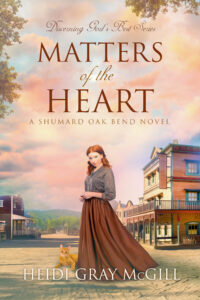
Unconventional Katie empathizes with the widows and orphans of the Civil War, searching for a place to call home in Shumard Oak Bend. But with no one to help her, she’ll need to do it secretly, a challenge she readily accepts. She’s taken charge before, and she’ll do it again, no matter who she has to outwit to get the job done.
He vowed to be his own man and stop doing everyone else’s bidding. But he follows orders when a pair of emerald green eyes, blazing red hair, and freckles that dance on the bridge of a pert nose conscript him to duty. Be his own man. Who is he kidding? Skunks don’t change their stripes. They leave disasters in their wake wherever they go, just like him.
Overcoming personal obstacles and finding your true self doesn’t mean going it alone. Yet the answer isn’t always in the one you seek.
“You’re seeing your failure. I’m seeing your worth.”
Third in a series Discerning God’s Best, Matters of the Heart by Heidi Gray McGill is easily a standalone novel. Set in 1866 Missouri, with the Civil War barely past, there are situations and a few words that some might find offensive, but which are true to the times.
PTSD, homelessness, caring for widows and orphans, standing up for oneself and one’s friends, and running from God are all themes of this book.
You will enjoy the characters you meet in this story. Sassy, fiery, passionate Katie, with an impossible dream. Hans, “tired of doing everyone else’s bidding. Tired of living under another’s rule. Tired of lying to himself that he could change.” Reverend Jenkins, oh, my! What a character he is!! And Aunt Aideen- so wise, humble, loving, encouraging, and willing to challenge people to be their best. Plus so many more secondary persons you will love as well.
I love that McGill focuses on the fact that though people are different, working together brings the best results. I love the belief not in coincidence, but “God incidence.” Also, there is a lot Truth for living imparted in these pages.
I received a copy of the book from Celebrate Lit, plus bought my own ebook. No positive review was required, and all opinions are my own.
Notable Quotables:
“So far, you’ve told me how you feel but not how God feels.”
“You’ve shared your thoughts, desires, and plans, but you need to listen to what God would have you do. It’s His path that matters.”
“He did not need a woman. He did not need this family, and he did not need God. He’d be just fine on his own.”
“…he wondered if he could ever outrun himself.”
“He’d heard more than once that freedom cost dearly. The war may be over, but there was no freedom for those now enslaved by their scars.”
“Now, he wanted to make something of himself, be his own man, prove to himself he could do more than just follow rules and orders.”
“Don’t make a decision based on a season of life that will alter the rest of your life.”
“He was telling her to live in the ‘yet’—that transitional time where she could grow and learn until He was ready to fulfill His will.”
“Yes, every step forward changes the view, it never remains the same.”
“I trust my God enough to believe He will provide exactly what we need at the moment we need it. Not a second early, nor a minute late.”
“But, scriptures are just phrases until we know God on a deeper level and on more than just paper. I learned God’s Word doesn’t become powerful until it becomes personal.”
My Rating
⭐️⭐️⭐️⭐️
Great!! A great post-Civil War novel with many nuggets of truth!!
About the Author
Heidi is an optimist who chooses to find the silver lining in life’s clouds of doubt. This plays out in her writing. Her ability to weave scripture seamlessly into the lives of her characters will uplift and encourage you, while her masterful storytelling will keep you turning page after page and wishing for more.
Heidi lives with her husband of thirty years near Charlotte, NC. When she isn’t writing, you will find her outside playing with her two grandsons, walking, scrapbooking, reading, cooking, traveling, or finding an excuse to have an outing with a girlfriend.
Fusing Faith and Fiction™
True Christian Fiction. Relatable Characters. Life-changing stories.
More from Heidi
Where did the idea for Matters of the Heart originate?
Before I was an author, I was the founder and director of an English as a Second Language ministry. The program touched the lives of students from 35 different countries. Regardless of culture, religion, language, or age, I found a substantial similarity in these students—they all wanted to improve their lot in life and that of their children.
Stories abounded of walks across deserts, financial hardships, desperate attempts to explain emergencies to medical professionals or law enforcement, failed verbal connections with schoolteachers, and an inability to obtain work because of their lack of language skills. Prejudice and distrust blocked them, culture shock took them outside their comfort zones, and the urgent need to survive made them scramble to dig deep inside and find creative ways to secure shelter and put food on their tables.
It wasn’t that these immigrants weren’t capable of achieving success. In their home countries, vocations varied from chemist and biologist with PhDs, to teachers, lawyers, and medical professionals. Others came from poverty and had little education but were not afraid of hard work, long hours, and low pay. They were tenacious, and they worked with relentless determination and a bullheaded resolve to achieve their goals. They relied on each other and soaked in everything around them in their desire to assimilate into the American culture and find a new place to belong.
Immigrants in the late 1800s were not much different. Individuals came to improve their lot in life and be a part of the greatest country in the world. In Matters of the Heart, Hans Korhonen left Finland with his brothers to take advantage of the land grants. Together, they worked to establish a farm large enough to sustain four families and support troops during the Civil War. Yet, in their desire to belong and give back to our great nation, Hans’s idyllic life changed through his service as a Union soldier.
Kathleen Murphy, or Katie, came to the United States to escape a life of extreme poverty and abuse in Ireland. Working in her aunt and uncle’s boarding offered more than a job. It provided the love and support of a family. Katie rose from her previous station and started fresh with hope on the horizon. She found a source of ministry that gave her life a purpose she’d not had before.
My association with my former ESL students helped me develop the characters in this book into individuals with which readers can identify.
Join Katie and Hans as they establish themselves in their new home of Shumard Oak Bend.
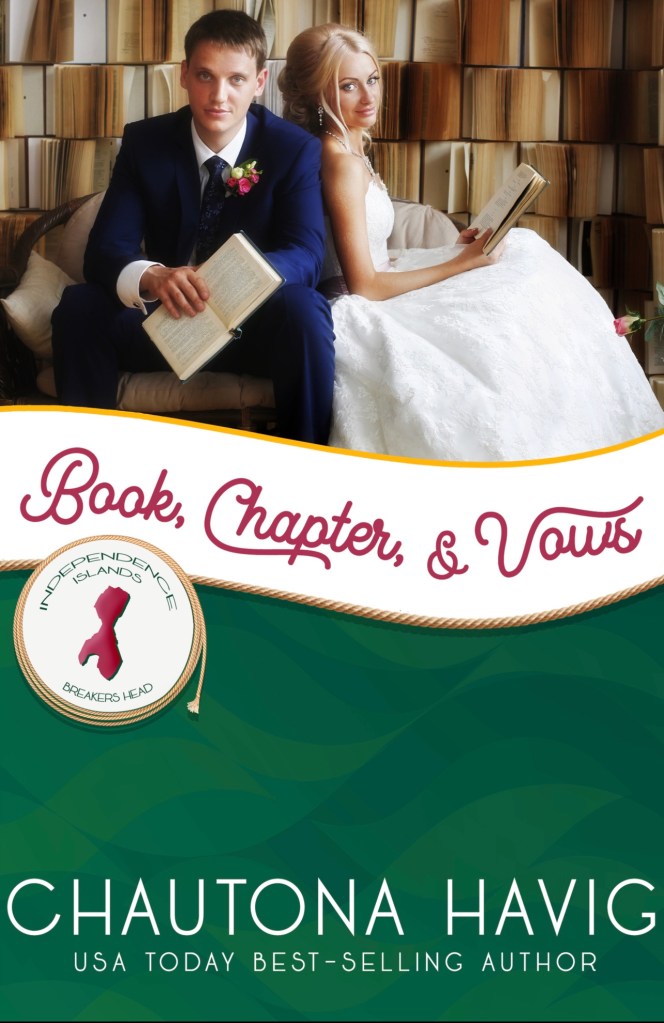
Falling in love with Benjamin wasn’t in the plan, but Mallory finds she’s all but lost her head and her heart after two and a half years of banter, memories, and now shared books.
But when her ex-fiance (does it count if it was just for a few hours?) shows up right in the middle of a writing project with Benjamin, the guy manages to ruin her happiness… again.
Benjamin has been keeping one tiny part of him back from Mallory–just the one thing that’ll repel her for good. So when the ex-boyfriend-slash-fiance shows up, and things look serious again, he takes a giant step back and prays he can keep his heart intact in the process.
They’re clearly meant for each other. God obviously has a plan. So what’s it going to take for Mallory and Benjamin to work things out and get those vows made?
This Breakers Head novel is Chautona Havig’s final book in the Independence Islands Series featuring five islands, six authors, and a boatload of happily-ever-afters.
“Say the hard things. Admit the faults, choose to make the sacrifices, step out in faith.”
A lady after my own heart, who loves books, coffee,( and other hot drinks) and loves to sell them together! Mallory Barrows is struggling to make her dream of a small bookmobile/ hot drink shop on the islands a reality. Now she has finally fallen for islander Benjamin Hornigold, a young friend of her beloved uncle Bud. Benjamin loves Mallory enough to do almost anything for her- except bare his soul of the secret that could separate them.
Chautona Havig invites us to slow down and return to life on Independence Islands, where Mallory Barrows is hoping for that big question from her true love, Benjamin. But deep-seated fears in both Mallory and Benjamin could overpower their love as a new threat or two lingers on the horizon. Will a joint project of love and some negative examples from the past be enough combined with faith and prayer to see these lovers united, or are they destined to a repeat their loved ones’ examples?
The quote at the top expresses one of the basic truths of the novel. So many to be gleaned from a Havig book. Another truth Havig’s characters are confronted with, one it took me years to learn, is this one:
“the Lord blesses our service however we offer it, but that doesn’t mean that every job is ours to do. He said sometimes we need to step aside because that frees up the work for the person the Lord has planned for it, and it frees us to do the work He has planned for us. I never saw it that way.” So happy Mallory and Benjamin could learn this early in life! It will save them a lot of frustration, thinking they are serving the Lord, when He may have other people better equipped for the job.
And Havig always makes me smile! “Is that what you get with a degree and success? A masters in rudeness?” This is especially potent as it applies to the characters’ situations.
Bottom line: if it’s a Havig novel you’re considering, buy it!! One read won’t do it justice. Considering the spiritual and wisdom value of this book, coupled with the entertainment value, I give it five stars!
I received a copy of this book from Celebrate Lit. No positive review was required, and all opinions are my own.
Notable Quotables:
“I plan to live the story in my heart. That’s how I best tell a story, lovey.”
“If the primary love of your life isn’t Jesus, you’ll fail the one you vow to love until death.”
‘…the lessons you learned don’t change based on the number of years you’ve been married. Truth is truth.’”
“But if you go through life as if everything you say and do is part of some checklist to godliness and marital bliss, you’ll miss out on the bold, daring life God has given us.”
“But I don’t think we should treat people like only their mistakes define them.”
“It will hurt. Change is just hard and it stinks. But sometimes we have to do the hard things.”
“Then a new character arrived on the scene. It walked over to guilt and elbowed guilt out of the way as if to say, “I’m determination, and I outrank you.’
“…every time you give in to those impulses, they become more frequent and more intense than the last. It’s harder to break the habit than it is to fight the temptation to let it form.’”
“You can’t fix it.”
… “But you can start fresh—like Anne Shirley—a new day with no mistakes in it.”
“His mercies,” Benjamin began. “‘They are new every morning.’”
About the Author
“Say the hard things. Admit the faults, choose to make the sacrifices, step out in faith.”
A lady after my own heart, who loves books, coffee,( and other hot drinks) and loves to sell them together! Mallory Barrows is struggling to make her dream of a small bookmobile/ hot drink shop on the islands a reality. Now she has finally fallen for islander Benjamin Hornigold, a young friend of her beloved uncle Bud. Benjamin loves Mallory enough to do almost anything for her- except bare his soul of the secret that could separate them.
Chautona Havig invites us to slow down and return to life on Independence Islands, where Mallory Barrows is hoping for that big question from her true love, Benjamin. But deep-seated fears in both Mallory and Benjamin could overpower their love as a new threat or two lingers on the horizon. Will a joint project of love and some negative examples from the past be enough combined with faith and prayer to see these lovers united, or are they destined to a repeat their loved ones’ examples?
The quote at the top expresses one of the basic truths of the novel. So many to be gleaned from a Havig book. Another truth Havig’s characters are confronted with, one it took me years to learn, is this one:
“the Lord blesses our service however we offer it, but that doesn’t mean that every job is ours to do. He said sometimes we need to step aside because that frees up the work for the person the Lord has planned for it, and it frees us to do the work He has planned for us. I never saw it that way.” So happy Mallory and Benjamin could learn this early in life! It will save them a lot of frustration, thinking they are serving the Lord, when He may have other people better equipped for the job.
And Havig always makes me smile! “Is that what you get with a degree and success? A masters in rudeness?” This is especially potent as it applies to the characters’ situations.
Bottom line: if it’s a Havig novel you’re considering, buy it!! One read won’t do it justice. Considering the spiritual and wisdom value of this book, coupled with the entertainment value, I give it five stars!
I received a copy of this book from Celebrate Lit. No positive review was required, and all opinions are my own.
Notable Quotables:
“I plan to live the story in my heart. That’s how I best tell a story, lovey.”
“If the primary love of your life isn’t Jesus, you’ll fail the one you vow to love until death.”
‘…the lessons you learned don’t change based on the number of years you’ve been married. Truth is truth.’”
“But if you go through life as if everything you say and do is part of some checklist to godliness and marital bliss, you’ll miss out on the bold, daring life God has given us.”
“But I don’t think we should treat people like only their mistakes define them.”
“It will hurt. Change is just hard and it stinks. But sometimes we have to do the hard things.”
“Then a new character arrived on the scene. It walked over to guilt and elbowed guilt out of the way as if to say, “I’m determination, and I outrank you.’
“…every time you give in to those impulses, they become more frequent and more intense than the last. It’s harder to break the habit than it is to fight the temptation to let it form.’”
“You can’t fix it.”
… “But you can start fresh—like Anne Shirley—a new day with no mistakes in it.”
“His mercies,” Benjamin began. “‘They are new every morning.’”
More from Chautona
It Happened AGAIN!
I remember the first book I had trouble finishing. Beneath the Cloak. It was the last book of the Wynnewood series, and I was dying to reveal the big secret that had been a big part of the story line. I spent hours writing very few words. Someone asked if I had writer’s block, but I didn’t. I knew every word I wanted to put on that page, but I kept procrastinating.
For weeks. We’re talking long, agonizing weeks.
Finally, I realized a significant part of why I hadn’t finished was because I didn’t want to. I didn’t want the series to end. Say goodbye to beloved characters? Agony, okay? I wanted to spend the rest of my life in Wynnewood seeing what happened with all the characters and all the things that would happen.
I just wanted to write a bunch of other books, too. What can I say? It’s a thing.
So, as I dove into writing the book I’ve been dying to write since I penned the opening scene of Christmas on Breakers Point, you’d think I’d have been prepared for the inevitable. I mean, it’s happened with several other series since that first time, so… yeah. All ready to combat the problem, right? Not hardly.
To be fair, I was also coming off being very sick, my mother being even sicker, so being crazy behind on everything. I mean, that had a lot to do with it taking so long to get going on it. But once I did, I’d type like crazy and then ignore it for a day or two before the story demanded more telling.
Then, just as I neared the big scene of Book, Chapter, & Vows… I went nuts on doing everything but finishing that book. No joke. I did. Sigh. Again, you think I’d learn.
After much soul searching and even more wailing at God about the cruelty of it all (I was in a dramatic mood, okay?), the solution came to me. Okay, God smacked me upside the head with a 2×4 of memories on how I solved every other, “don’t wanna finish this series” crisis.
See, way back with Wynnewood, the only thing that got me to the finish line was a promise I made to myself. “It doesn’t have to end here. You can write more if you want to. There’s nothing to say you can do ‘Wynnewood, the Later Years’ or something like that.”
Just that one promise to myself that I didn’t have to say goodbye was all it took for me to get back on that trusty old Toshiba laptop and pound out those last few chapters.
And here I was again, not ready to say goodbye to a series—to these islands that feel so crazy real to me. I didn’t want to say goodbye to the characters and their quirky ways. Would you?
Now… you’re going to laugh at me. Go ahead. I mean, I did. See here’s the deal. I didn’t have to make that promise to myself again. “What?” you say? “What do you mean?”
Yeah. I don’t have to say goodbye to the characters or the islands. Why? Because we have another island series coming, the Suamalie Islands, and Mallory is going to visit those islands.
If that isn’t enough for me, I have another series all planned for the Independence Islands, too! Yeah. That. I mean, what was I not thinking?
As soon as I thought of that, I was able to get in there, get the last few scenes written and pass it off to the fabulous Christy for her editorial magic. As for me, I think I’m going to go play around just a little bit with one of the Josie Parker Mysteries. I mean, why not?
It Happened AGAIN!
I remember the first book I had trouble finishing. Beneath the Cloak. It was the last book of the Wynnewood series, and I was dying to reveal the big secret that had been a big part of the story line. I spent hours writing very few words. Someone asked if I had writer’s block, but I didn’t. I knew every word I wanted to put on that page, but I kept procrastinating.
For weeks. We’re talking long, agonizing weeks.
Finally, I realized a significant part of why I hadn’t finished was because I didn’t want to. I didn’t want the series to end. Say goodbye to beloved characters? Agony, okay? I wanted to spend the rest of my life in Wynnewood seeing what happened with all the characters and all the things that would happen.
I just wanted to write a bunch of other books, too. What can I say? It’s a thing.
So, as I dove into writing the book I’ve been dying to write since I penned the opening scene of Christmas on Breakers Point, you’d think I’d have been prepared for the inevitable. I mean, it’s happened with several other series since that first time, so… yeah. All ready to combat the problem, right? Not hardly.
To be fair, I was also coming off being very sick, my mother being even sicker, so being crazy behind on everything. I mean, that had a lot to do with it taking so long to get going on it. But once I did, I’d type like crazy and then ignore it for a day or two before the story demanded more telling.
Then, just as I neared the big scene of Book, Chapter, & Vows… I went nuts on doing everything but finishing that book. No joke. I did. Sigh. Again, you think I’d learn.
After much soul searching and even more wailing at God about the cruelty of it all (I was in a dramatic mood, okay?), the solution came to me. Okay, God smacked me upside the head with a 2×4 of memories on how I solved every other, “don’t wanna finish this series” crisis.
See, way back with Wynnewood, the only thing that got me to the finish line was a promise I made to myself. “It doesn’t have to end here. You can write more if you want to. There’s nothing to say you can do ‘Wynnewood, the Later Years’ or something like that.”
Just that one promise to myself that I didn’t have to say goodbye was all it took for me to get back on that trusty old Toshiba laptop and pound out those last few chapters.
And here I was again, not ready to say goodbye to a series—to these islands that feel so crazy real to me. I didn’t want to say goodbye to the characters and their quirky ways. Would you?
Now… you’re going to laugh at me. Go ahead. I mean, I did. See here’s the deal. I didn’t have to make that promise to myself again. “What?” you say? “What do you mean?”
Yeah. I don’t have to say goodbye to the characters or the islands. Why? Because we have another island series coming, the Suamalie Islands, and Mallory is going to visit those islands.
If that isn’t enough for me, I have another series all planned for the Independence Islands, too! Yeah. That. I mean, what was I not thinking?
As soon as I thought of that, I was able to get in there, get the last few scenes written and pass it off to the fabulous Christy for her editorial magic. As for me, I think I’m going to go play around just a little bit with one of the Josie Parker Mysteries. I mean, why not?
Genre: YA Dystopian Fantasy / Alice in Wonderland retelling
Release date: July 12, 2022
Solve the clues. Face your fears. Survive the Trials.
All Alice Liddell wants is to escape her Normal life in Oxford and find the parents who abandoned her ten years ago. But she gets more than she bargained for when her older sister Charlotte is arrested for having the infamous Wonder Gene—the key to unlocking the curious Wonderland Reality.
Soon, Alice receives a rather cryptic invitation to play for Team Heart in this year’s annual—and often deadly—Wonderland Trials. Now she has less than twenty-four hours to find her way into Wonderland where nothing is impossible . . . or what it seems.
The stakes are raised when she discovers players go missing during the Trials each year. Will she and her team solve the clues and find the missing players? Or will betrayal and distrust win, leaving Alice alone in a world of her own? Follow the White Rabbit into this topsy-turvy fantasy where players become prey, a sip of the wrong tea might as well be poison, and a queen’s ways do not always lead one where they ought to go.
“Wonderland is for Wonders. Outsiders don’t belong.”
Hmmm…This is definitely a YA novel in terms of the mental processing going on, the quick changing of allegiances, the uncertainty of knowing one’s own mind. Seems to me that Sara Ella captured the thought processes of a young adult very well in her retelling of Alice in Wonderland as she pens The Wonderland Trials.
I am going to go out on a limb and say this is an allegorical novel, reminding me loosely of the allegory of C S Lewis’s Narnia. I loved that part. If you love chess, you will certainly want to read this novel. Also, if you love the nonsense of Alice in Wonderland (which I always struggled with), you will love this remade tale. Sara Ella does a fantastic job of incorporating many of the characters and sayings of the original work and making some of them very endearing to a nonpreferred reader of the Lewis Carroll novel like myself. I found an affinity to Chess, Alice, and Dinah that I did not expect out of this novel that contained more nonsense than I thought I could handle. It worked together enough to make a believer out of me by the end of the book! For that reason, while this read is not my chosen cup of tea, it certainly is a great antidote for the skeptic like myself, and I am accordingly giving it 5 stars!
One caveat-reader beware- this book builds in intensity to a near frenzy (how fitting!), then ends in a cliff-hanger. That is something I always want to know before starting a book, and I do not consider that a spoiler!!
I received a copy of the book from Celebrate Lit. I also bought my own ebook. No positive review was required, and all opinions are my own.
Notable Quotables:
“We’ve let fear rule us-divide us -for so long-we’ve forgotten we’re all part of the same team.”
“Sometimes family isn’t the one you’re born with. It’s the one you find. Or the ones who find you.”
About the Author
Once upon a time, Sara Ella dreamed she would marry a prince and live in a castle. Now she spends her days homeschooling her three Jedi in training, braving the Arizona summers, and reminding her superhero husband that it’s almost Christmas (even if it’s only January). When she’s not writing, Sara might be found behind her camera lens or planning her next adventure in the great wide somewhere. She is a Hufflepuff who finds joy in the simplicity of sipping a lavender white mocha and singing Disney tunes in the car. Sara is the author of the Unblemished trilogy and Coral, a reimagining of The Little Mermaid that focuses on mental health. Her latest journey into the world of Alice’s Adventures in Wonderland feels like coming full circle after her time spent chasing the White Rabbit around Walt Disney World. Sara loves fairy tales and Jesus, and she still believes “Happily Ever After is Never Far Away.” Connect with her online at SaraElla.com or find her on Instagram at @saraellawrites.
More from Sara
Welcome to Wonderland!
When I started this journey down the rabbit hole, I had no idea where it would lead me. From switching publishers to signing a book contract during a pandemic, this writing journey has certainly been an adventure for the books!
As with every story I write, life handed me a few trials along the way with this one. I didn’t know how it would end until a few weeks before deadline. With that time crunch came an epiphany that altered a good portion of the plot—an idea that had me scrambling to rewrite entire scenes right up until the final hours before I turned the story in to my editor. It was difficult, but the book is better for it—I am better for it.
It could be said that an author shapes the story, but I personally believe it’s equally true that the story shapes the author. Every book I have written has changed me in some way. With The Wonderland Trials, I can pinpoint three takeaways that helped me grow in ways I never expected.
I learned to not take life so seriously.
We all have to do the adulting thing. We have bills to pay and homes to clean and deadlines to meet. But in the midst of all that chaos and craziness is a time to laugh. To play. To make a mess on the living room floor building Legos with my toddler or take a walk to the park.
I found myself often rushing through time with friends because I had to write or work or check more boxes off my task list. But feeling stressed and cutting friend and family time short didn’t accomplish anything. It didn’t get my book written faster. I’m not saying to put things off that need to be done—it’s important to be responsible. I am saying I learned that I have to balance work and play, and most importantly, I need to be present for those in my life.
It’s not only okay to sit back and relax now and again, it’s necessary. I need to let go of the constant to-do list and invest my time in things that bring me joy. That way, when it’s time to sit down and pound the keys, I’m filled and inspired, rather than tired and anxious.
I learned to see the beauty in found family.
They say you can choose your friends, but you can’t choose your family. I disagree. As a girl who was raised by a stepdad who has loved me unconditionally as his own from the time I was two, I think there is something truly special about family that you find and make your own.
There have been times I’ve felt jealous of my friends who still have their biological parents around. I lost my mom in 2012 and my birth dad in 2020. I have maybe a handful of blood relatives left. I love them to bits, and I’m so grateful for them! But my family extends beyond the boundaries of blood. When I really think about it, I have family coming out of my ears and then some.
I have besties who became my soul sisters and women who stepped in as moms and grandmas. I have big brothers who would protect me with their lives and nieces and nephews I get to spoil on holidays and birthdays. As Alice says in The Wonderland Trials, “Sometimes family isn’t the one you’re born with. It’s the one you find. Or the ones who find you.”
I learned to believe in the impossible.
I’ll be the first to admit that I’m the pessimist in my family. I try to see every worst-case scenario when making a decision. I ask all the what-ifs in the book. I’m like MJ in the Spider-Man movies— “If you expect disappointment, then you can never really get disappointed.”
My husband, on the other hand, has the faith of a child. When I’m lacking in faith, he’s there to remind me of all God can do. And God almost always surprises me with how He goes about doing those things. In a world with drive-thrus, mobile bank deposits, food deliveries, and every other form of instant service we can think of, the call to be patient and wait on the Lord is often forgotten.
I want answers now. I want my family member to be healed now. I want the baby we’ve been waiting over a year to adopt now. God can do the impossible, right? So why doesn’t He hurry up and do it already?
Because God is not a vending machine. And just because He chooses not to perform the miracle I want when and how I want it, that doesn’t mean he isn’t working. In fact, it’s the waiting period when God tends to do His best work on me.
More often than not, I am the impossible one, the impossible heart that needs changing. The stubborn clay that needs molding. The cracked tea cup that needs to be fixed and filled with rivers of gold. What I see as impossible to fix or change, God sees as an opportunity to help me grow. So I’ll keep believing in the impossible. After all, God took me, an impossibly helpless sinner, and made me into something new.
Thank you for taking time to read my thoughts and for giving this little book a chance. Happy reading, Wonders! The impossible awaits!
To celebrate her tour, Sara is giving away the grand prize package of a signed Limited Edition Hardcover of The Wonderland Trials, $25 Barnes & Noble Gift Card, and $15 Starbucks Gift Card!!
Be sure to comment on the blog stops for nine extra entries into the giveaway! Click the link below to enter.
This epic journey is her last hope to find her lost brother—the only family she has left.
When Lola Carson’s father died, his last words spoke of a half-brother she’d never known about. And now, to claim her own inheritance and come to terms with her father’s secret life, she must find this mysterious man—whose last known whereabouts are somewhere west of the wild Rocky Mountains. After hiring family friends to accompany her on the trek, she sets out for a wilderness few white women have ever seen. She doesn’t expect the majestic peaks to captivate her so, nor the half-dead brave they find on one of the slopes.
White Owl left his village and his broken heart behind when he set out for a fresh start. His newfound faith is the one anchor in his life. He’s desperate to learn more about the God he’s committed to follow and become an interpreter for the missionaries who led him to faith. But he barely starts his journey when a hunting accident nearly kills him. The woman who discovers him in the midst of his fevered delirium seems to be a gift from above.
But the more White Owl learns about Lola’s companions and her dangerous quest, the more he realizes his own calling is clear—to take her safely to her brother. The question is, will he have to sacrifice more than his heart to accomplish that goal?
From a USA Today bestselling author comes another epic journey through breathless landscapes and adventure so intense, lives will never be the same.
“Just because he was afraid didn’t mean she had to be.”
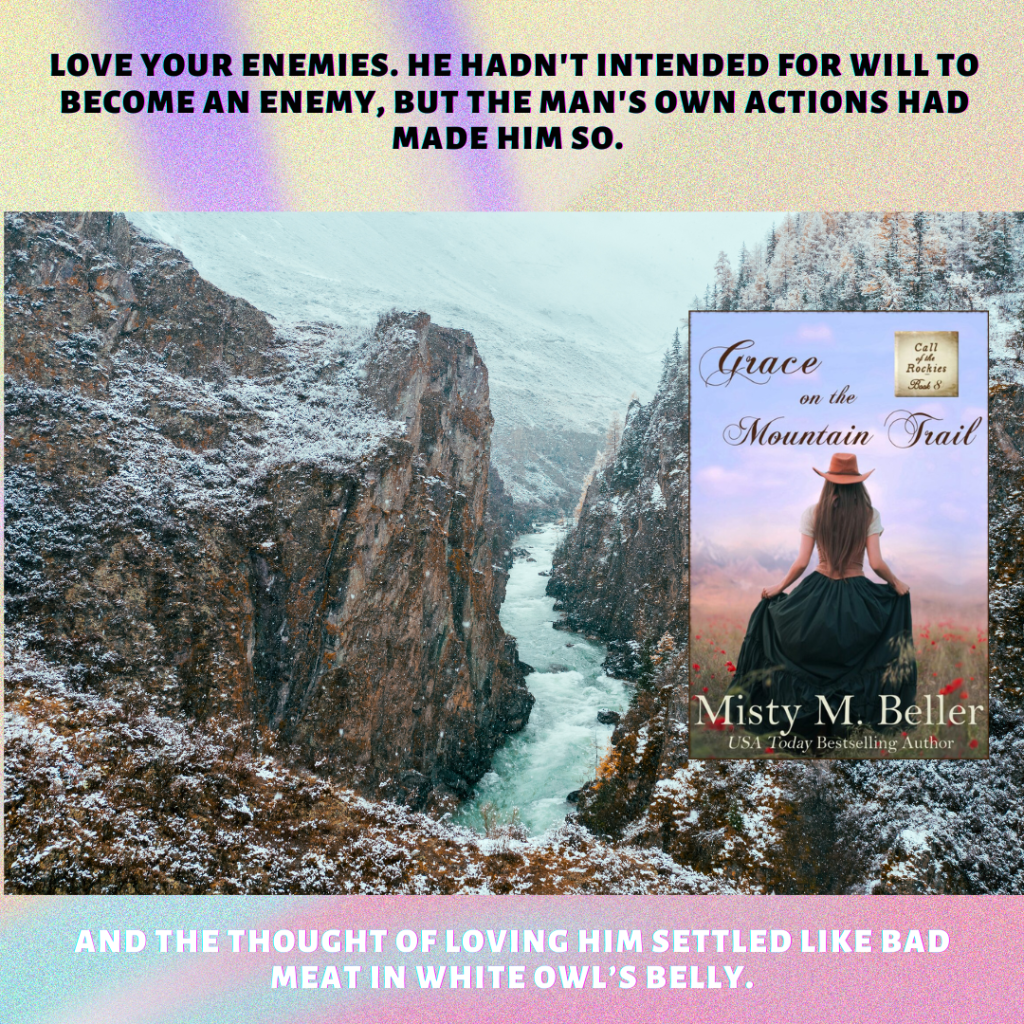
Beautiful!! I love each novel of Misty M Beller’s better than the last! In Grace on the Mountain Trail, Beller takes us back to the 1830s West as we travel this exciting journey with Lola Cameron and Ike and Will Van Buren. Lola’s cold, distant father has died, and left behind the startling news that she has a half-brother. To keep her home, she must find him and return East within a year. Lola finds a severely injured Native American, White Owl, on the trail, and that changes the trajectory of the journey.
Grace on the Mountain Trail is the 8th book in this series, Call of the Rockies. It is an awesome mixture of faith, fear, doubts, and emotions. Romance struggles with societal expectations and other relationships that may be affected. I loved how the title fits one character’s life all the way through the book, while another only sees the truth of that Grace in retrospect. Beller provides plenty of action, but also draws her characters strongly so that many relationships are equally important to the successful tapestry of the story. I love a tightly woven story like this!
I also loved how Biblical truth was inserted a verse or thought at a time, with a great, short application to the situation, the story flow uninterrupted, but enriched. “Do good to those who persecute you. Repeating the verse was the best way to keep his frustration down.” And how I loved the faith in action of this faithful character!!
I loved how Beller takes a few stereotypes and turns them on their heads. How refreshing! If you love historical fiction and pioneer-age West, don’t miss this Beller offering!
I received a copy of this book from Celebrate Lit via NetGalley. I also bought my own ebook. No positive review was required, and all opinions are my own.
Notable Quotables:
“Between conniving men and stubborn ones, she had her work cut out for her.”
“Truthfulness was one of the gifts she now valued most.”
“…And she’d be on her own with one she no longer trusted.”
“She’d been petty in her life, thinking that the way she’d given God the cold shoulder all those years gave her the upper hand. He had created all this, imagined it and spoke it into being. If He wanted a part in her life, who was she to say no?”
My Rating
⭐️⭐️⭐️⭐️⭐️
Misty pens such rich, compelling novels, and Grace on the Mountain Trail is no exception!
About the Author
Misty M. Beller is a USA Today bestselling author of romantic mountain stories, set on the 1800s frontier and woven with the truth of God’s love.
Raised on a farm and surrounded by family, Misty developed her love for horses, history, and adventure. These days, her husband and children provide fresh adventure every day, keeping her both grounded and crazy.
Misty’s passion is to create inspiring Christian fiction infused with the grandeur of the mountains, writing historical romance that displays God’s abundant love through the twists and turns in the lives of her characters.
Sharing her stories with readers is a dream come true for Misty. She writes from her country home in South Carolina and escapes to the mountains any chance she gets.
More from Misty
Is this the book for you?
With so many books out there, it’s sometimes hard to know if a new book will be the right fit for you or not. I thought it might be fun to share some highlights that may help you know if you’d like to read Grace on the Mountain Trail.
If you…
Love adventure and don’t mind being snowed in (at least in your imagination as you sit snuggled in your comfortable house).
Fall for Native American heroes who are, yes, strong and capable, but also searching for a fresh start and eager to grow in their fledgling faith.
Find unusual and remote settings fascinating, especially the Rocky Mountains!
Enjoy historical detail and are eager to live vicariously in the early 1800s Montana frontier.
What to expect from Grace on the Mountain Trail?
Emotion-rich sweet romance.
Native American heroes who know how to be both tough and gentle.
The grandeur of the Montana Rockies.
Tough heroines who do what needs to be done.
Adventure that will keep you turning pages.
A peek at one of our favorite characters from earlier in the series!
If Grace on the Mountain Trail sounds like the right fit for you, I pray you love Lola and White Owl’s story!
Curl up with your pup and sink into a delightful small-town mystery as riddles and rescues stack up in book one of a new cozy mystery series.
Marigold Evans’ first attempt at rescuing an abandoned pooch lands her in a drainage pipe in Brenham Texas. . .and almost in jail, until Parker Jenson comes to her rescue. Then a bad day only gets worse as the Lone Star Vet Clinic, where they both work, is vandalized and the list of suspects starts to climb. With the help of her fellow employees, Marigold sets out to simultaneously solve the crime, rehab the rescued dog, and help more dogs in crisis. But why would anyone continue to work against all their good efforts?
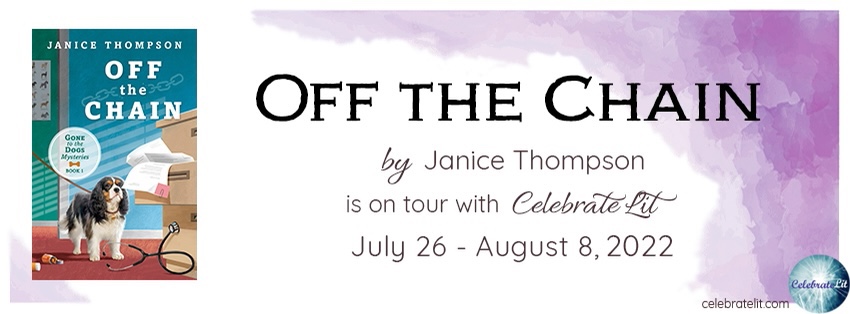
I thoroughly enjoyed Off the Chain by Jan Thompson. This first in a new series by Barbour, (each cozy mystery written by a different author) is a smashing success in my book. Here’s why:
Faith. I didn’t have to worry about bad language. While I love cozies, what I read is limited because of either bad language or inappropriate bedroom scenes, neither of which are present in this book, nor do I expect them in this series. This is a book and series where faith is very real part of story. There are many mentions of prayers for specific needs, and God’s answers. “Just pray about it, Marigold. God’s got an answer for you.”– I love this advice from one friend of Mari’s. As one radio counselor recently reminded her audience, ‘Instead of taking problems to everyone else, take them to God. He’s the One with the answers!’
Friends. I loved the group of vet clinic workers who actually are friends and supportive of each other. You can see that they will make a great character base in the little town (another must of a cozy) of Brenham.
Hilarity. Another cozy must-have. This one has it in spades. While situations may be ridiculous, that doesn’t stop the genuine laughter from erupting often. Score again.
Animals. Specifically, rescue dogs. And they are a main focus of the story, not just a sideline or afterthought. If you are a dog lover, this book just became irresistible for you(It will actually hook you on the first page).
Romance, loss, and an eccentric grandma. These all feature well into our novel and help round it out to be the great experience it is! Don’t miss this one!
I received a copy of this book from Celebrate Lit via NetGalley, plus I bought my own ebook. No positive review was required, and all opinions are my own.
My Rating
⭐️⭐️⭐️⭐️⭐️
Magnificent!! I can’t wait for the next in this great dog rescue cozy series!
About the Author
Janice Thompson, who lives in the Houston area, writes romantic comedies, cozy mysteries, nonfiction devotionals, and musical comedies for the stage. She is the mother of four daughters and nine feisty grandchildren. When she’s not writing books or taking care of foster dogs you’ll find her in the kitchen, baking up specialty cakes and cookies.
More from Janice
Dogs, dogs, and more dogs! My world is full of dogs. If you follow me on social media you’re probably overwhelmed with dog photos, but I simply can’t help myself. I’m in love with pooches of all shapes and sizes.
My fascination with dogs began when I was six years old and I got my first pup, Spunky. He was a mixed breed terrier. From that day until now I’ve had the pleasure of owning many, many pups—some purebreds, some street dogs that needed a safe place to stay, some elderly with chronic or acute health issues. I can’t get enough. They offer unconditional love, after all!
A few years back I was asked to foster for a local rescue, My Chi and Me. The rest, as they say, is history. For a quick glimpse at some photos, follow this link. You’ll see that I’m mostly enamored with small dogs. (Hey, I live in a tiny townhome and have limited space!) That said, I’m always willing to take on one more.
My most recent rescue ventures landed me squarely in the middle of a book idea: Why not use a dog story as the basis for a cozy mystery? My editor at Barbour Publishing wanted something dog-themed and I was happy to oblige. That’s where the idea for Off the Chain (and the whole Gone with the Dogsseries) came from—a simple idea involving dogs and crime.
I took the opportunity to focus solely on rescue dogs as the idea developed. These days (especially post-Covid) the need for homes for these pups is great. I linked arms with my BFF, Kathleen Y’Barbo, and together we set our series in Brenham Texas, not far from our stomping ground in the Woodlands. I felt strongly that we should merge two separate dog worlds: rescue and veterinary. (Hey, Brenham is close to A&M and they know a thing or two about veterinary training!)
Thus, the Gone with the Dogs series was born. And writing the first book, (Off the Chain), was a blast! I hyper-focused on one primary point of view character, a vet tech. (As the owner of three dogs I feel like I’m always in the vet’s office!) My stories, which is written in first person, took me back to my writing roots. I love, love, love writing in first person because I “become” the character. Fun, right?
My editors loved the book and it got some fun endorsements, so I’m excited to see what my readers think. I can’t wait to get their feedback. I hope it’s not too “Ruff!”
But, seriously. . .I’m hyped! And I’m feeling so blessed to merge my worlds—dogs and writing!